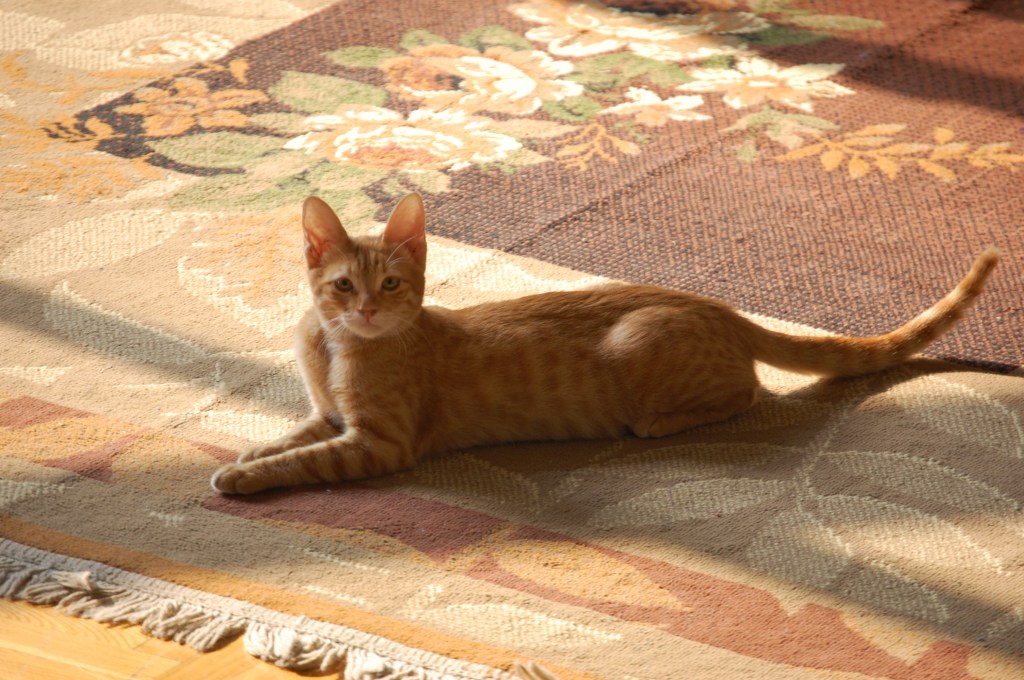
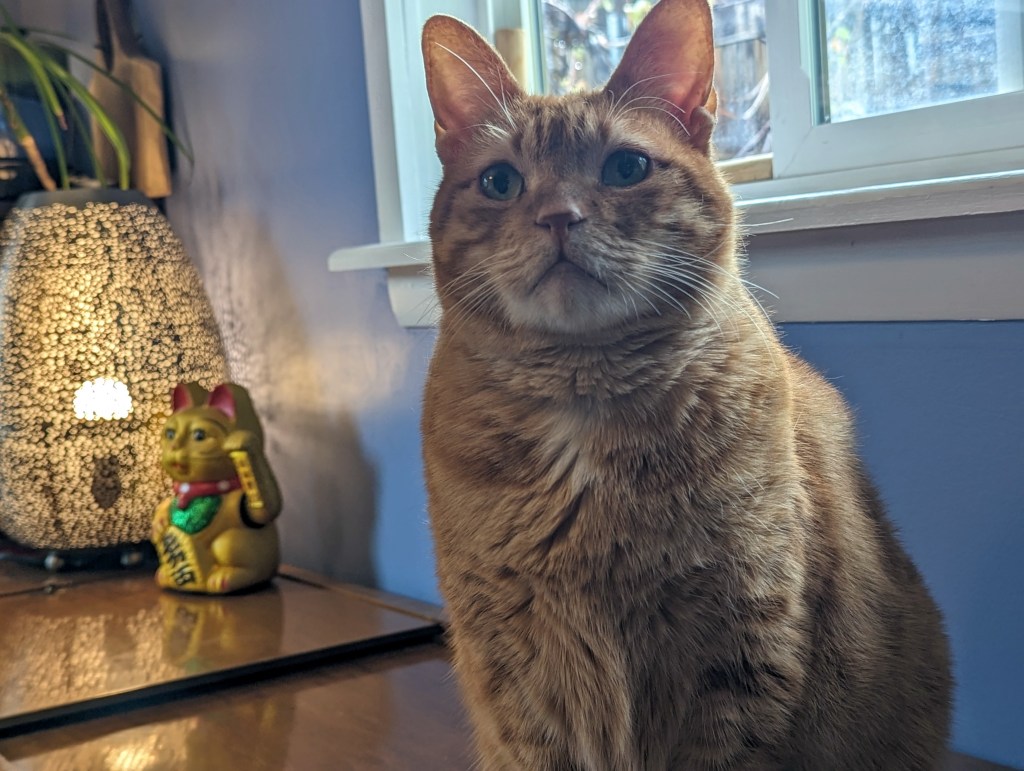
My cat Snefru was born somewhere on the streets of Maadi to an unknown family of feral cats near the Midan Victoria. She is an orange Arabian Mau cat. She has a small head, orange spots, and a whisper meow. She’s never had a voice as far as I know, but she still talks quite a bit and always makes her presence known.
She’s one of the friendliest cats I’ve ever been around. She will greet people at the door, and she always wants to be around wherever the people are. When she was a kitten we would play fetch with the bottle caps from the water bottles in Egypt, and she would always try to climb to the top of everything.
Feral cats are ever-present in Cairo, as are street dogs (Baladi dogs). One of the unfortunate truths about Egypt is that there is a lot of trash in the streets, which means there is a lot of food for animals. Often, trash collectors will gather trash from around an area and pile it in one spot waiting for trucks to come by and pick it up. The system is inefficient, and there are often piles of garbage that never go away. Those are the worst spots, but there is just a lot of trash around everywhere. Maybe it’s a lack of education about the harm litter does to the environment, a sense of apathy about their community, or maybe even a sense of entitlement about who cleans up trash and who doesn’t (another unfortunate truth about Egypt) you just can’t get away from it, and you learn to look past it.
You sort of learn to look past the feral animal populations as well. But they are everywhere. Baladi dogs can run in packs around neighborhoods, and I suppose there is concern about those packs becoming aggressive. They are unwelcome intruders for the most part. Dogs are often thought to be evil by folks in Egypt, and they are chased away, poisoned, and even shot in certain cases. For the most part they leave everyone alone. It always seemed that the Baladi dogs had a pretty decent life of lazing about in the sun and digging through trash for treats. They are dirty and sometimes full of ticks, but seemingly happy otherwise…for the most part.
Cats, on the other hand, are well loved in Egypt. Storekeepers put out plates of food, water and milk for them. They are usually left to be wherever they are, and if they are friendly at all they are usually adopted quickly. But many of them are fully wild and avoid people at all costs. There were many times when I saw a cat with serious injuries or a cat that was sick, but it was impossible to catch and take to the vet because it was so feral. Those cases are heartbreaking, and deeply discouraging.
There are organizations in Cairo that try to help in all manner of ways. Some try to catch animals to spay and neuter them, others run adoption agencies that try to get kittens or puppies early and raise them for folks to adopt. Many veterinarians will spay or neuter an animal if you bring it in for no cost. It is possible to adopt a Baladi dog or an Egyptian street cat even in the United States. (I have provided an incomplete list of some of those organizations below, please add more in the comments if you know of them!)
There was a black cat that lived in the stairwell of our apartment building that we called Nefertiti (of course…eye-roll emoji). She was basically wild, and we could never get near her. She would watch us from the landing above or below us, and the bowabs who took care of our building would feed her I think (or maybe one of the other residents in the building). She had kittens while we lived there, but they disappeared before we could get to them, which makes me think someone else found a place for them, or she moved them somewhere else. But she was still around after that. We tried hard to become friends with her and adopt her, but she was never going to be a pet, you could just tell.
I had a group of friends who got together each week to play board games, video games, hang out, etc. One of the guys in that group had two cats and had adopted this friendly little orange mau cat that had come up to him on the street. She was just a kitten but was clearly very friendly. He told me he was looking for a place to send her, and I told him I was interested. I bought a cat carrier, a litter box, some cat food, and a couple of pet bowls and went over in a taxi to pick her up. My wife and I decided that we should name all our cats after Pharaohs, since cats were so beloved in ancient Egyptian culture. Plus, I like the name Snefru because it’s fun to say.
She quickly became part of the family and spent her days following the sun beams around the room. We had a nice balcony, and she liked to go sit out there curled up in a chair in the full sun. I built her a little cat jungle-gym out of cardboard boxes, and she made friends with all our visitors.
One of the ways you really get to know a place is to engage in day-to-day chores. We found a vet, and a pet store that sold supplies. Those kinds of trips helped ease the culture shock of living in a new place. It’s less lonely with a pet around, and they are full of wonderful stories. If you are an expat in Egypt and feeling isolated or lonely, check out one of these adoption agencies and see if you can find a cat!
I know, you’re probably concerned with what to do once you have to leave Egypt. We were too. Depending on where you are going, there are different rules about bringing a pet into the country. Some countries have a strict quarantine time that pets have to be kept for observation. Some countries don’t allow the import of cats. Others are pretty easy going about it. When it came time to come home we learned that bringing a cat back to the United States is not particularly hard, or rather, it’s not hard to get it through the border. Cats need to appear to be healthy at the time of arrival or they might be subject to quarantine or a veterinary examination (at the owner’s expense). Cat’s don’t need to have documentation of vaccinations to enter the US, but it’s a good idea to have them vaccinated and have that paper work to present, especially if they send it to a veterinarian.
When we brought Snefru back, the hardest part was the routing. Certain European countries require pets to be quarantined when they arrive in the country. It was unclear to me if that meant that if you were making a connection your animal would still be subject to a quarantine, or if that meant if you were just intending to stay in the country. Regardless, if there were problems at the airport and we had to find a hotel or something, our cat might have to abide by that country’s quarantine law, and it would delay our trip home. Other countries are as free and easy with the rules as the United States.
We booked flights with Lufthansa, made a connection in Munich, and flew directly back to Denver. Snefru stayed in her cat carrier underneath the seat the entire flight. We lined the carrier with a pet-pad in case she peed and brought several replacements with us to change them (note: she did not pee or poop, until just before we landed in Colorado). We let her out on a leash in Munich, but she was too stressed about the trip and ended up just wanting to stay in her carrier.
When we arrived at customs, the border officer basically said “yep, that’s a cat” come on in. He didn’t pull her out of the carrier and gave her paperwork a cursory glance. I’m sure everyone’s experience is different, but it really could not have been easier.
If you are flying with an animal, make sure you check all the requirements for each country you are stopping in and what you need to bring for them. Folks travel with their pets all the time, and airport workers are mostly accustomed to it.
Snefru lives here in Colorado now, and has a charmed life chasing sunbeams around the house and greeting all of our friends. Everytime we pull something out of a box from Egypt she sniffs it carefully and often rubs up against it, which makes me think she still remembers Cairo. I’m not an expert on cat psychology though. She’s the sweetest, and we are so glad she came home with us from Egypt.
Bonus!!! We also rescued another cat as well in Egypt. She was a beautiful little orange kitten that came up to us on the stoop of our apartment building. She was sick when we picked her up. She was gentle and sweet. We took her to the vet to get her vaccinated and spayed. She and Snefru didn’t get along very well, and we had a friend who wanted a cat as well. So, that little cat went to live in that home, and I believe is still living in Cairo!
Cairo, the bustling heart of Egypt, is a city of contrasts—ancient pyramids alongside modern skyscrapers, bustling bazaars next to serene mosques. While it’s a must-visit destination for any traveler, navigating its vibrant streets can feel overwhelming at first. To help you enjoy your time while staying safe, here are some tips drawn from personal experience and advice from locals.
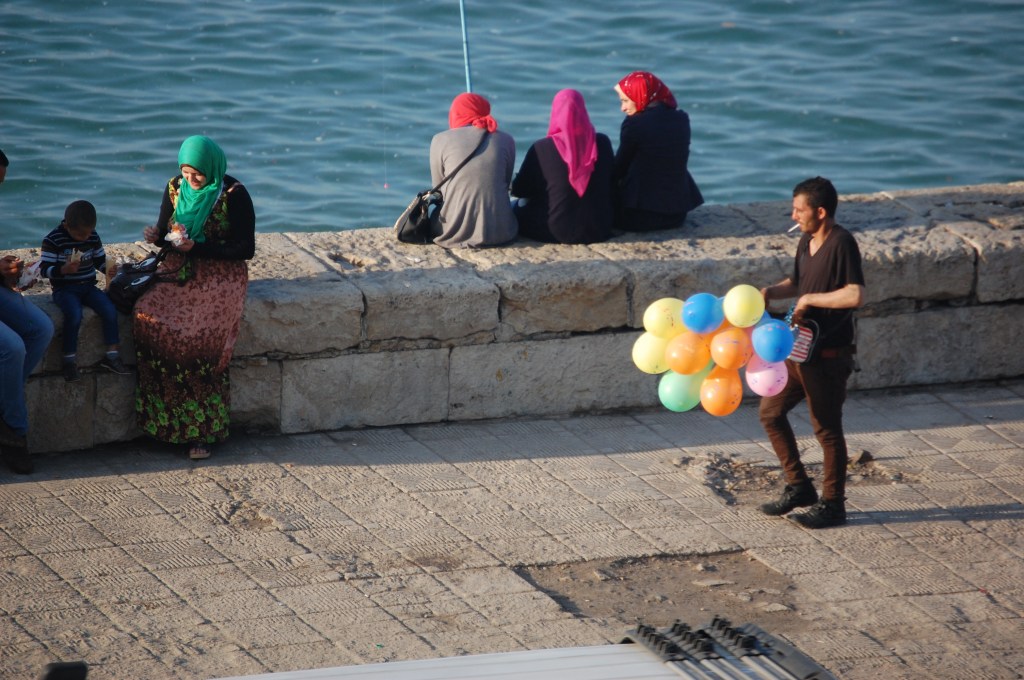
The Corniche in Alexandria
1. Blend In and Stay Aware
Cairo is a city that thrives on energy, and part of its charm is its lively streets. However, blending in can help you avoid unwanted attention. Dress modestly, especially if you’re visiting religious sites, and observe how locals interact. Avoid flashing expensive jewelry or gadgets, as this can make you a target for petty theft.
Keep your belongings close in crowded areas like Khan El-Khalili or Tahrir Square. A cross-body bag with zippers is a smart choice.
Carry a scarf, especially if you are a woman, so you can cover your head if you visit a religious site. It’s also helpful in desert areas with blowing sand.
Wear closed toe shoes, not just for respect, but also for safety.
It’s best not to wear shorts and tank-tops in Egypt.
2. Choose Transportation Wisely
Cairo’s traffic is famously chaotic, and crossing the street requires confidence. If you make eye contact and walk confidently they will likely avoid you. Confidence is key!Use pedestrian bridges whenever possible.
For getting around, ride-hailing apps like Uber or Careem are more reliable and safer than hailing a taxi off the street. If you opt for public transportation there are options. The Metro train runs frequently, but it doesn’t go everywhere. There are cars specifically for women, though women can ride on any car, men cannot ride on the women only cars. Avoid rush hours (8-10 AM and 4-6 PM) when buses and metro cars can become extremely crowded. Watch out for pickpockets on crowded buses and trains.
3. Be Mindful of Scams
Tourist hotspots can attract hustlers and scammers. While most Egyptians are genuinely warm and hospitable, some individuals may try to overcharge for goods, services, or guide you to “special shops” for commission. It’s ok to say “no, thank you to them” and to speak more sternly if they won’t leave you alone. The word for “no” in Arabic is “La”.
Learn to haggle: It’s part of the culture in markets, but know when to walk away. Approach haggling as fun rather than annoying.
Beware of unsolicited help: If someone approaches offering a free tour or insists on guiding you, politely decline unless it’s prearranged with a trusted company. Even police might try this and ask for a tip after guiding you.
Check official prices: For example, ensure you know the ticket costs at attractions like the Pyramids of Giza or the Egyptian Museum. Even better, buy the ticket yourself from the ticket kiosk!
4. Stay Hydrated and Avoid Heat Exhaustion
Cairo can get intensely hot, especially in summer. Always carry water with you, and opt for bottled water rather than tap.
Wear sunscreen, sunglasses, and a hat to protect yourself from the sun.
If you’re visiting outdoor sites like Giza or Saqqara, schedule your tours early in the morning or late afternoon to avoid peak heat.
It’s best to wear a lightweight long-sleeve shirt to avoid sun exposure, dirt, and blowing sand.
5. Respect Local Customs
Cairo’s culture is a blend of ancient traditions and modern influences, with a strong emphasis on Islamic values. Being respectful of these customs goes a long way:
Avoid public displays of affection.
During Ramadan, be mindful of eating or drinking in public during daylight hours.
Always ask before photographing people, especially women.
Avoid photographing government buildings, police officers, military personnel, security checkpoints, embassies, and guard-posts.
6. Trust Your Intuition
If something feels off, trust your gut. While Cairo is generally safe, especially in tourist-friendly areas, it’s always wise to stick to well-lit, populated streets at night. Avoid walking alone in unfamiliar areas after dark.
7. Emergency Contacts
It’s always helpful to have a few key numbers saved:
Police: 122
Ambulance: 123
Tourist Police: 126
The word for police is the same in Arabic and English, but they don’t have a “p” sound in Egyptian Arabic. So they say “bullies”. It means police though.
8. Make Connections with Locals
One of the best ways to stay safe is to make local friends. Egyptians are known for their hospitality and often go out of their way to help visitors. If you’re unsure about a neighborhood or need advice, don’t hesitate to ask a local shopkeeper, hotel concierge, or trusted guide.
Cairo is an unforgettable city with its rich history, vibrant culture, and warm people. By staying mindful and prepared, you can focus on immersing yourself in the magic of this timeless destination. Have fun, stay curious, and enjoy every moment in the City of a Thousand Minarets!
Have you visited Cairo? Share your experiences and tips in the comments below!
Photos are allowed in most of these places but there might be an extra charge
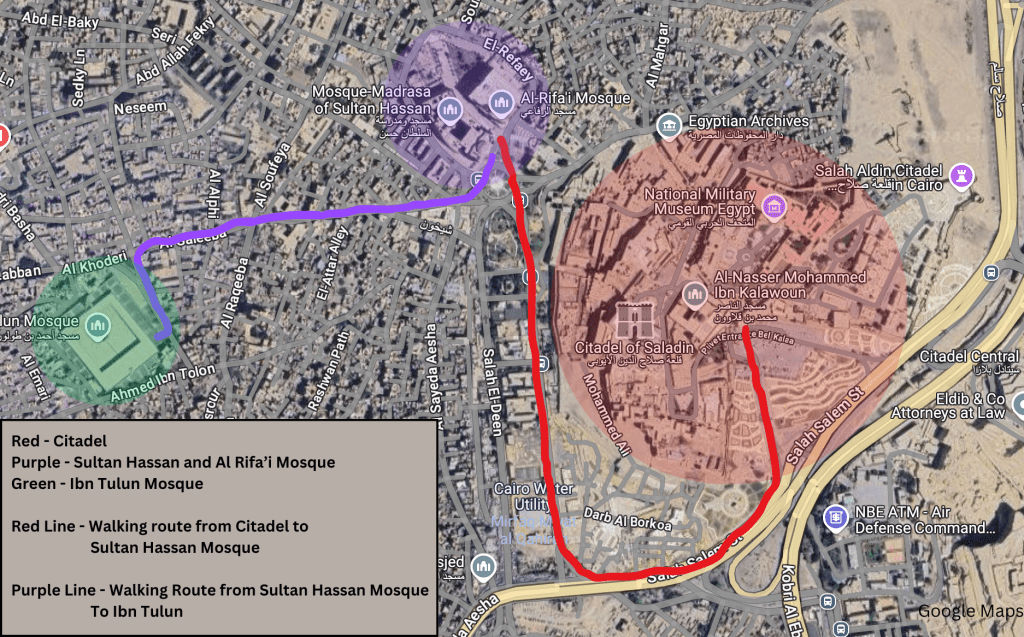
Walking map at the bottom of the page!
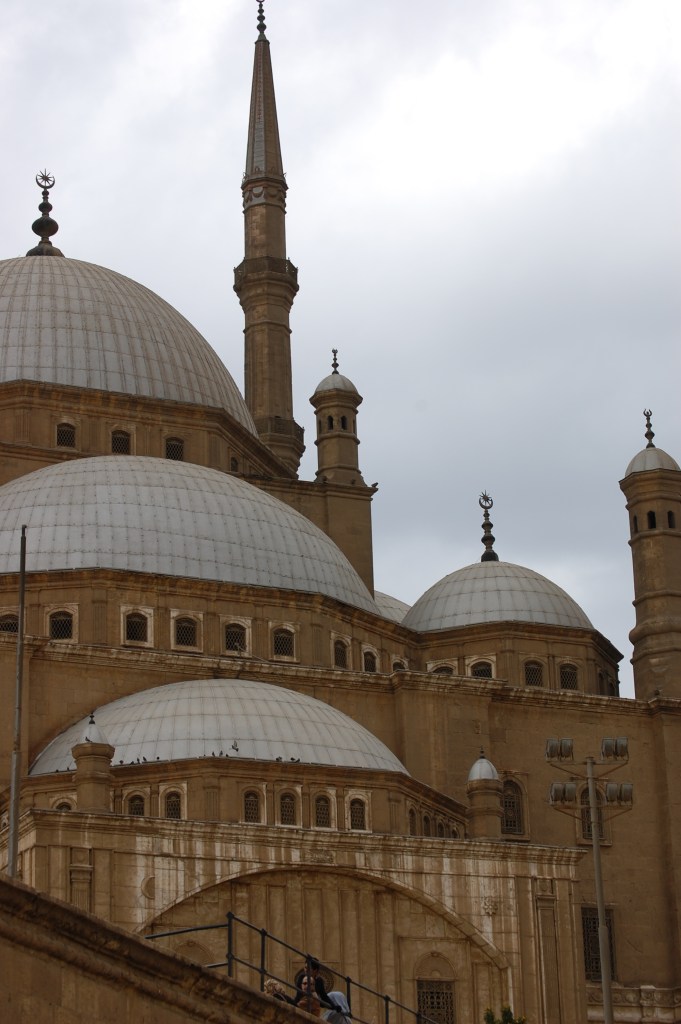
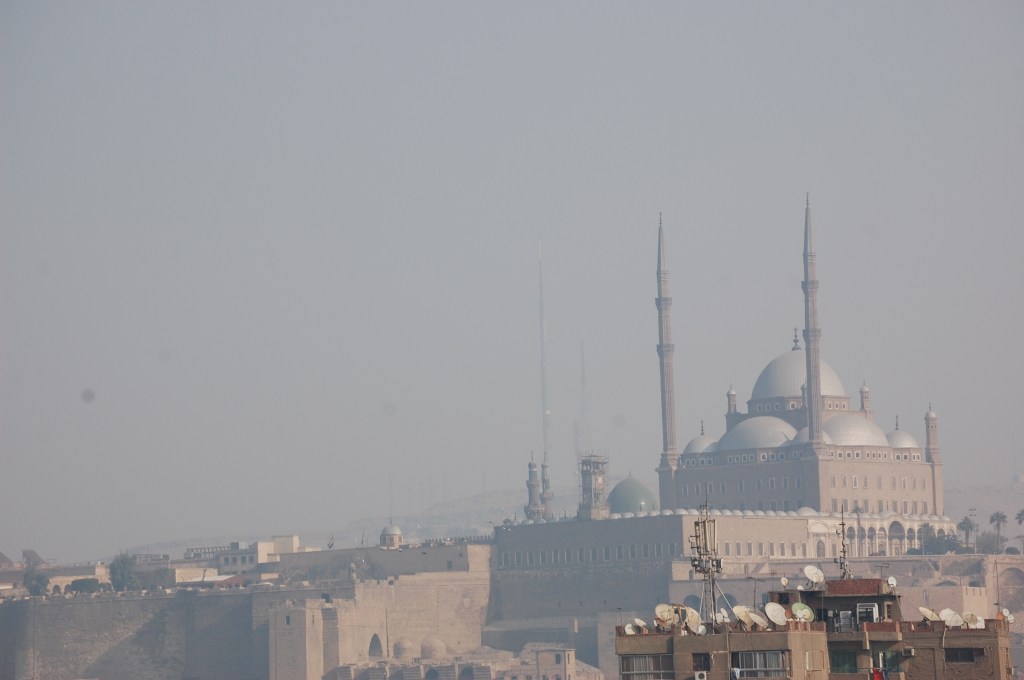
The Citadel of Cairo dominates the skyline of the city. The picturesque Mosque of Muhammed Ali Pasha is iconic with it’s mounded domes and tall slender minarets. It pops out between the apartment buildings and at the end of streets as you wander around bustling Cairo.
It was built by Saladin in the 1100s (though not finished during his lifetime) and was a defensive fortress and palace for him. It was the center of power in Egypt from the era of Saladin until the mid-1800s when Khedive Ismail moved to the Abdeen Palace in downtown Cairo. It was the site of many historic events during the Islamic era of Egypt’s history including the 1811 massacre of the Mamlukes by Mohamed Ali Pasha.
The Citadel is a large castle built on a promontory below the Mokkatum cliffs in Cairo. It was a very defensible position, with a broad view of the entirety of Modern Cairo (and certainly all of ancient Cairo.) It’s tall stone walls joined the city walls of Cairo which made a strong fortress city that was the center of Egyptian government for about a millennium. It is still there looming over the modern city of Cairo.
1. Citadel & Al-Nasser Mohammed Ibn Kalwoun Mosque
You can access the Citadel on Salah Salem street. It is an operating military base as well as a museum, tourism, and religious destination, so there are security measures. You can have your driver drop you off at the bottom of the hill and you can walk up to the entrance. There is a metal detector and security checkpoint that you will have to go through. I can sometimes be quite busy, but they usually move fairly quickly.
There is a lot to see in the Citadel itself. There are museums related to Egypt’s modern governmental history including the National Military Museum, the National Police Museum, and the Citadel’s Prison Museum. These might not be of particular interest to most tourists visiting Egypt, but if you have extra days it is always interesting to see how countries view themselves by visiting their national museums. However, I would avoid those if you want to see the older and (in my opinion) more interesting Islamic sites.
Once you are through the gate, walk up the hill and follow the wall on your right around the corner until you find the entrance to the Al-Nasser Mohammed Ibn Kalwoun Mosque. Take your shoes off before entering, and ladies need to cover their heads. IMPORTANT!!! DO NOT WEAR YOUR SHOES IN A MOSQUE!!!
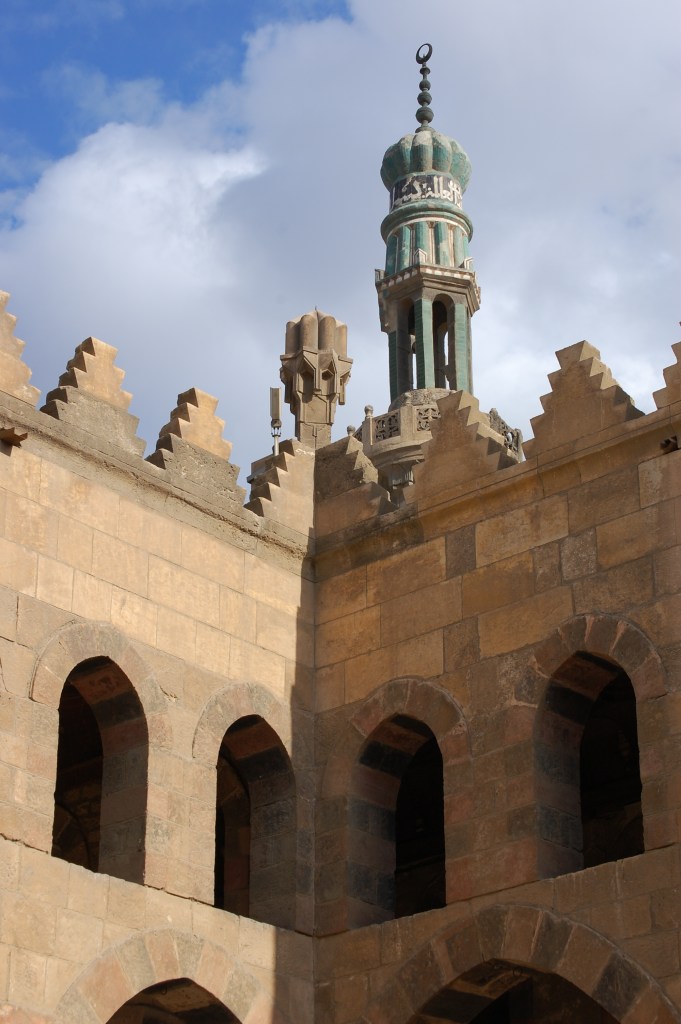
Though it’s not as picturesque from the outside the Mosque of Al-Nasser Mohmmed Ibn Kalwoun is very interesting. It was built in 1318 by the Mamluks and was the royal mosque of Egypt where the leaders would perform their Friday prayers. It has an open sahn (essentially a courtyard) surrounded by pillar supported arches. Some of the stone used in the construction of the mosque was taken from ancient pharaonic sites around the Cairo area. You can see the large dome supported by granite columns that were taken from ancient Egyptian temples. If you look around for other stone elements that look similar it’s likely that those came from ancient temples as well. An earthquake near the island of Crete caused widespread damage in Egypt in 1303. The limestone covering of the pyramids was shaken off, many buildings and minarets in Cairo and Alexandria were toppled, and the great Lighthouse of Alexandria was damaged so badly it eventually came down as well. Many buildings in Cairo feature stone from sites that were destroyed during that quake. It features a lot of wonderful Mamluk architectural elements, and a beautiful traditional layout.
From there, head to the west into the big open area in front of the Mosque of Muhammed Ali Pasha. The other museums are opposite of the mosque if you decide you want to see them, but if not, head towards the door to the sahn at the mosque. Sometimes there are little shoe-cover booties you can wear, but I always take my shoes off when I walk around this mosque. I carry them with me, because I usually go out a different door than where I go in. I also try not to set them down on the ground in the mosque. If you need a free hand, tie the shoelaces together and hang them over your shoulder or put them in your bag.
Muhammed Ali Pasha was the first Khedive of Egypt and the founder of modern Egypt. He was responsible for the purge of the Mamluks and for breaking Egypt away from the Ottoman Empire. His descendants ruled Egypt until the 1950s (albeit under British occupation from 1879-1956). He modernized their military, worked to build a modern government structure, and restructure Egyptian society. His legacy is disputed, but there is no doubt that the mosque of Muhammed Ali is one of the most striking in the whole of Egypt.
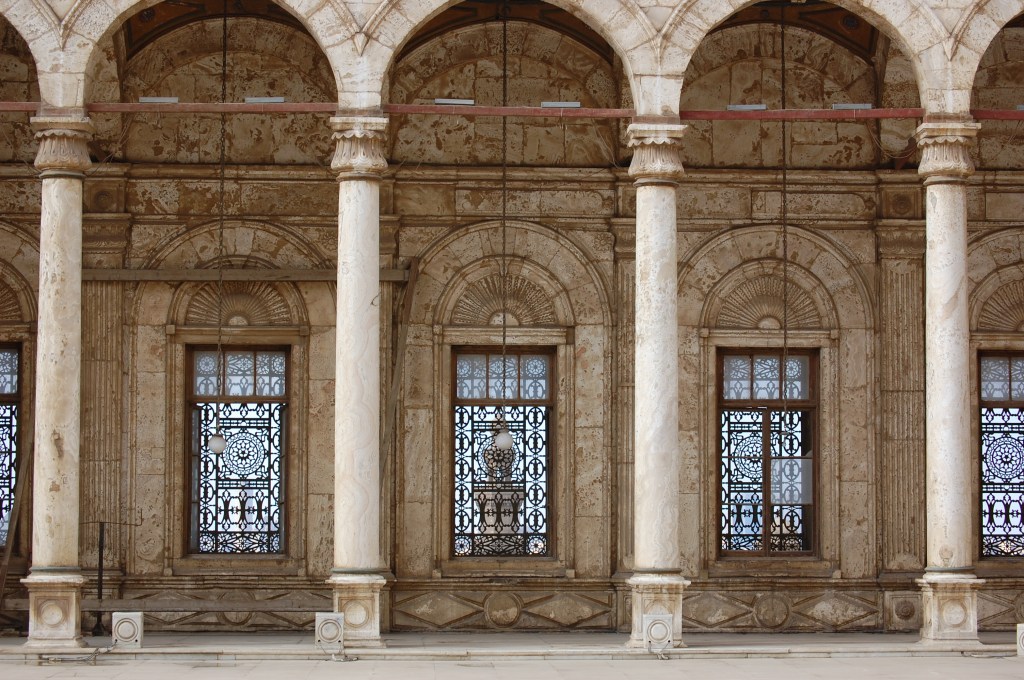
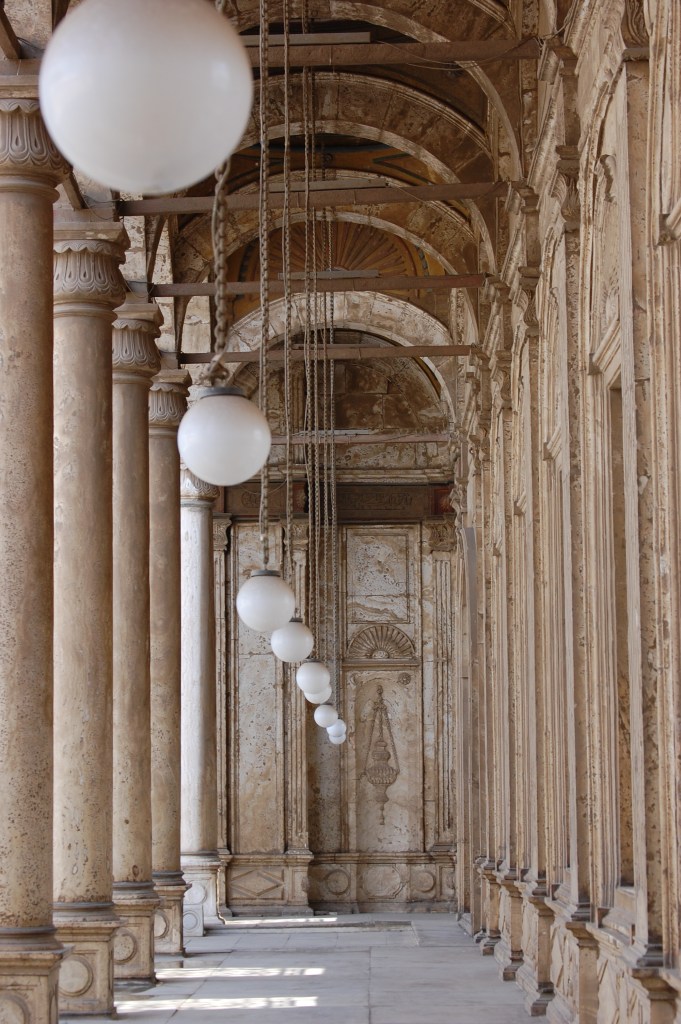
Built over eighteen years starting in 1830, the mosque features and exterior sahn, and a large, elaborately decorated, domed interior. The alabaster exterior has turned brown over the centuries of dust and smog, but you can see through all of that to the beauty underneath if you squint your eyes hard enough. The ornate arches around the perimeter frame elaborate windows where views of Cairo peek through. It’s worth a slow stroll around the sahn to see the vistas through the windows. On clear days (of which there aren’t many) you can see the pyramids on the horizon. The large clock was given to Muhammed Ali by King Louis Phillipe of France in the late 1830s.
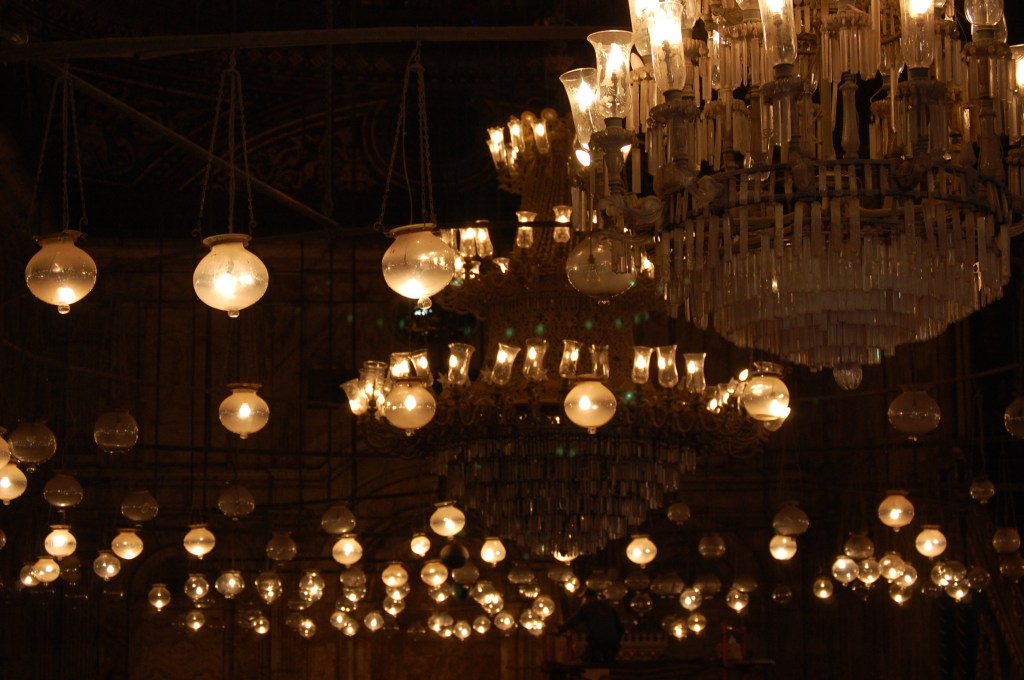
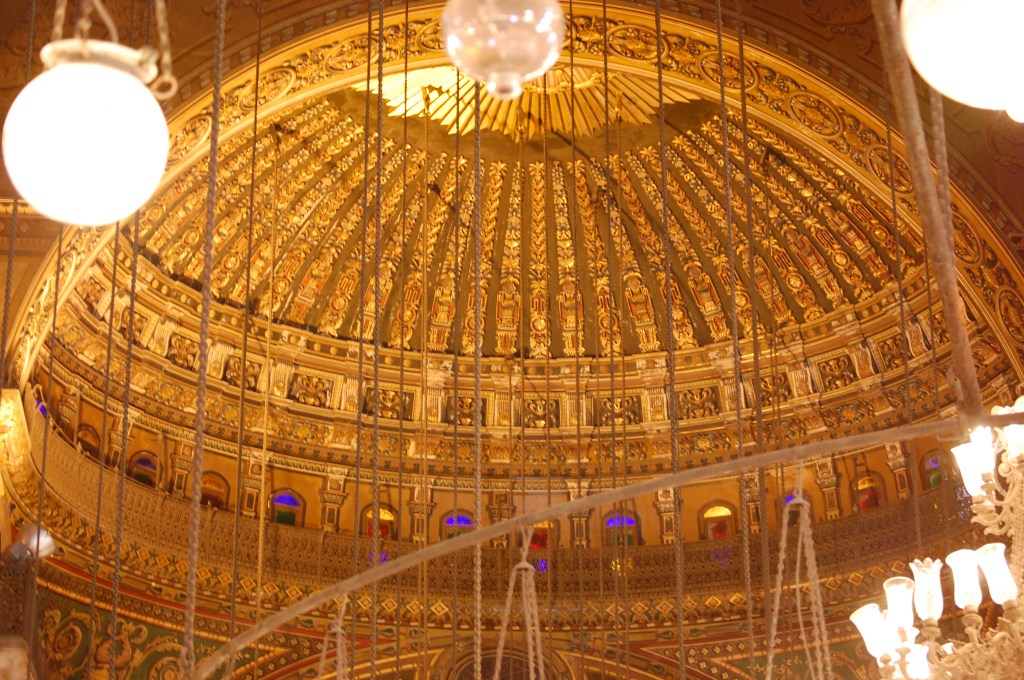
Inside the enormous domed room in the mosque there are many striking architectural features. The cascading domes create a unique geometric ceiling, supported by decorated alabaster columns. There are enormous circular chandeliers orbiting each other in the center of the room. It’s a striking cavernous place with beautiful decoration on all sides. There is a tall minbar (pulpit) off to the right as you face the qibla (wall pointing towards Mecca) and a smaller minbar next to the mihrab (a niche in the qibla wall that is ornately decorated.) There are usually lots of people in the mosque including school groups, families, and others. I remember that it was often local Egyptians visiting.
Out the door to the west, there is a nice overlook of Cairo. You can see many of the other old mosques, and (on a rare clear day) the pyramids way off in the distance. It’s a good place to get your bearings about where you will be walking. You can see the old gate of the citadel called Bab El Azab (bab means “gate”) which is near two of the other mosques I will be discussing in this piece. You can also see the beautiful (and ancient) mosque of Ibn Tulun. It is a square mosque peeking out from the chaotic concrete buildings of modern Cairo. It is straight west of the Muhammed Ali Mosque.
I always thought this was a good place to sit and look at the city for a while and just soak in Cairo. You can get a good feel for what’s going on in the modern city, and you can almost visualize what the ancient Islamic city must have been like. Most of the oldest parts of Cairo are to the north of the Citadel and it is hard to see them from the vantage point to the west of the mosque, but there is a lot to look at, and it’s nice. Buy a coke and hang out for a little bit.
Muhammed Ali Mosque DomesThe Pyramids on a clear day from The Mohamed Ali MosqueMohamed Ali Mosque Sahn ArchesMohamed Ali Mosque Sahn HallChandeliers in Muhammed Ali MosqueMuhamed Ali Mosque DomeThe Muhammed ALi Mosque from Ibn Tulun on a smoggy day.
3. Mosque-Madrassa of Sultan Hassan & Al-Rifa’i Mosque
Once you have spent enough time looking out at the city and you feel like you have your bearings, make your way back to the entrance of the citadel (where the metal detector was.) If you are adventurous, and are up for a bit of a walk, and if it’s not too hot, you can turn to your right and walk along Salah Salem Street, down the hill, and turn right on Salah El-Deen street, which will bring you under the looming walls of the citadel and into Salah El-Deen Square which is right in front of Bab El Azab, the big gate to the citadel.
I’m not sure what it’s like now, but I remember it was lined with auto-mechanics fixing cars or tires. I never felt unsafe walking there, but it’s probably always a good idea to have a buddy along with you when you’re walking around. That’s probably decent advice for any city, but especially one where you don’t speak the language.
If you need a rest, there are some nice places to sit in the Sultan Hassan & Al-Rifai Mosque compound. It’s another good place to soak in the views of Cairo, especially looking up at the lithic citadel.
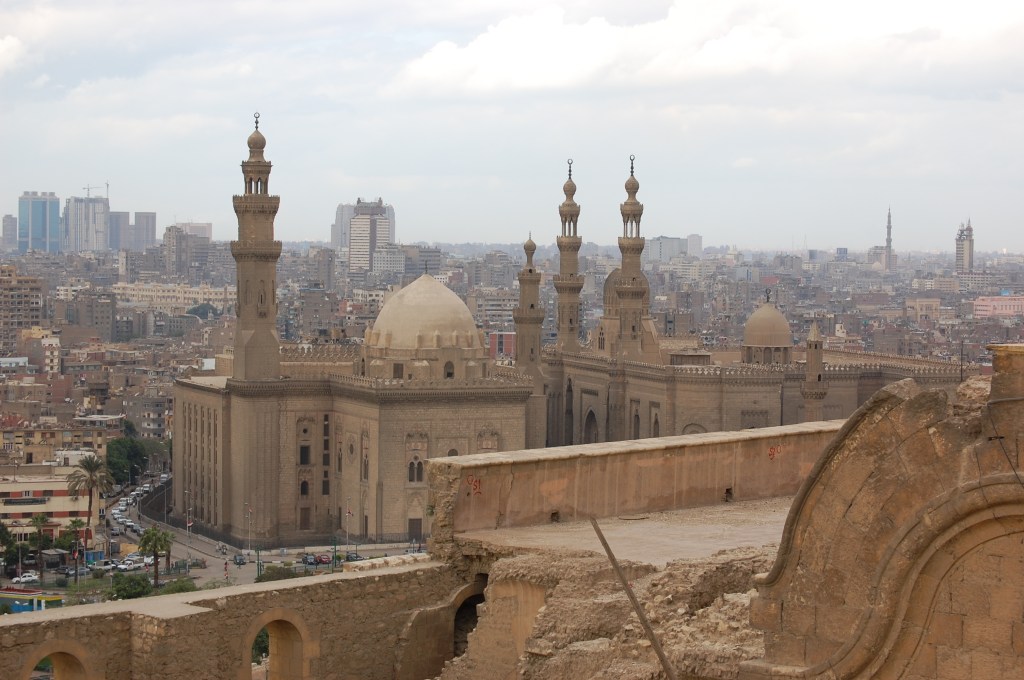
You will need to purchase a ticket at the booth between the two mosques, then make your way back to the angled entrance, with the unbelievable entrance portal at the top of the landing. The mosque with the angled entrance portal is the mosque of Sultan Hassan, and the other is the mosque of Al Rifa’i.
The two mosques compliment each other well, and it almost seems as if they were always next to each other, but this is not the case. The Mosque-Madrassa of Sultan Hassan is almost 600 years older than the neighboring Al-Rifa’i mosque. The Hassan mosque was built in the mid-1300s and the Al Rifa’i mosque was finished in 1912 in a style that matches.
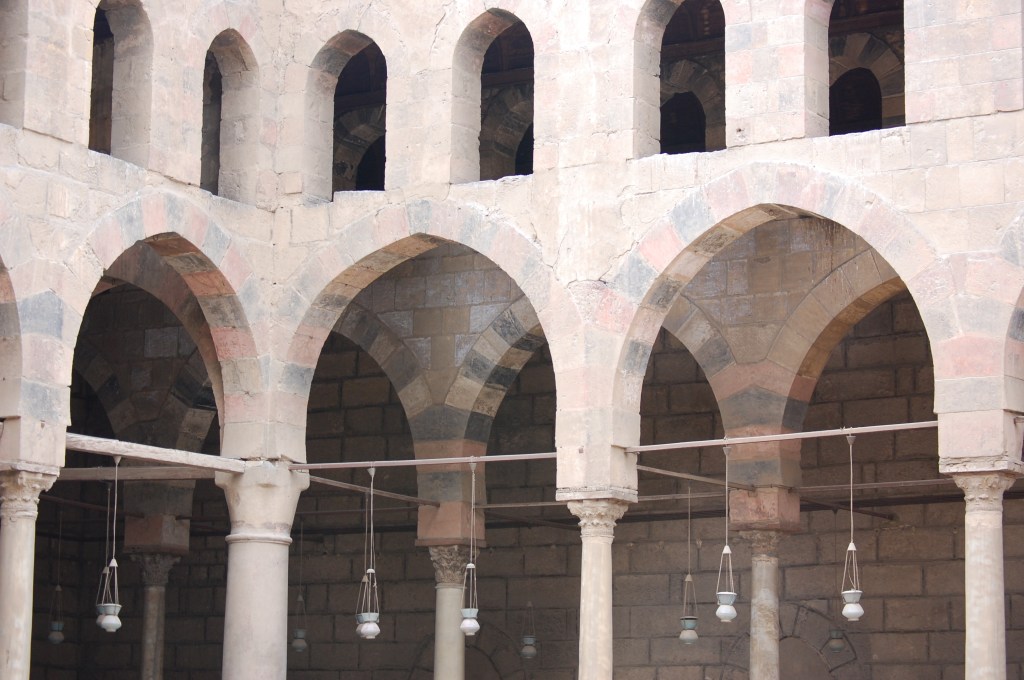
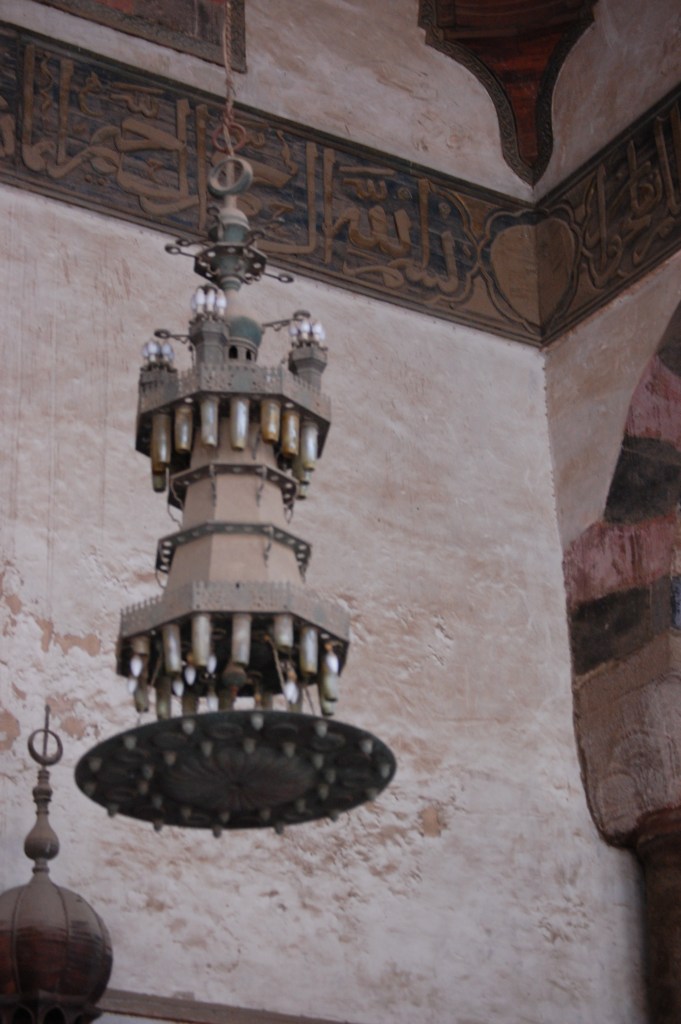
The Sultan Hassan mosque was one of the most expensive mosques in Cairo when it was built and was a school as well as a place of worship (a madrassa is a school, and often refers to a religious school.) It is a large stone and brick building with thick walls and winding corridors that lead to a large open sahn surrounded by large open iwans (large covered areas that are open to the courtyard. The iwans are decorated with several lanterns hanging from long chains, and there is a central ablusion fountain in the center of the sahn. It is a beautiful mosque with stunning decoration and spectacular medieval architecture.
The Al-Rifa’i mosque is associated with the Rifa’i order, which is a Sufi order within Sunni Islam. One of that movement’s most important figures, Ali Abu Shubbak, is buried there. It is a similar size to the Sultan Hassan mosque, but it is much newer and is fully enclosed. It’s enormous arched interior is dark in comparison to the open sahn at the center of the Sultan Hassan Mosque, but it it monumental and beautiful, though maybe not as beautiful as the Sultan Hassan Mosque next door.
Besides Alu Abu Shubbak, the Mosque of Al-Rifa’i is also the burial place of several other historic figures that might be of interest. The Khedive Ismail Pasha, three of his wives, and two of his children are buried there. Sultan Hussein Kamal, King Fuad I, and King Farouk are buried there as well. Perhaps, most surprisingly to visitors, Shah Mohamed Reza Pahlavi of Iran was buried there after his death in Cairo in 1980 following his exile from Iran. His father, Reza Shah Pahlavi, was also temporarily interred there until his body was returned to Iran in 1950.
If seeing both of these mosques seems too overwhelming, or if you are short on time, don’t miss the Sultan Hassan Mosque. In my opinion it is much more beautiful and historically significant than the Mosque of Al Rifa’i.
Sultan Hassan Mosque and Mosque of Al Rifa’i from the Citadel
4. Sheikhoun Road/Saleeba Street
It is a similar distance to walk from the Sultan Hassan Mosque to the Mosque of Ibn Tulun as it was to walk from the citadel entrance down to the Sultan Hassan Mosque. You could catch a cab or an Uber if you want, but it’s fun to stroll through the neighborhoods and witness the day to day of Cairo life.
To get to Ibn Tulun from Sultan Hassan mosque, go to the south west corner of the Salah El-Deen square and find Sheikoun Road which is also Saleeba Street or Al Saleeba. It starts near the post office. Sometimes the road signs are hard to see (if the exist at all) but they are often posted on the corners of buildings. Once you find the road, head away from the Citadel and towards the Nile.
There are several sites along Sheikoun Road that are worth seeing, but there’s not necessarily a need to stop at any of them. Just observing as you walk by will be enough. For instance, not far from the start of the road is the Sabil-Kuttab of Sultan Qaitbay. It is a beautiful historic building from the 1400s. A sabil (sabeel) is a public fountain where the neighborhood got its water before the modern era of plumbing. The kuttub is a primary school that teaches the Quar’an. It’s a beautiful building with ornate stonework that’s worth pausing for.
About halfway between Sultan Hassan Mosque and Ibn Tulun is the mosque of Prince Sheikoun (or Shaykhu). It was built in the mid 1300s and is very beautiful. (It’s worth seeing if you have lots of extra time, but if you don’t you should continue on to Ibn Tulun.) Regardless, stop for a minute to see the beautiful mashrabaya (wood lattice balconies) on the mosque and the house near it. Mashrabaya used to be commonplace in Cairo, but there are fewer and fewer of them these days. It’s worth a pause.
A little further on the north side of the road you can see the Sabil Umm Abbass, an Ottoman era water fountain that is beautifully decorated with ornate floral patterns, and marble work. It is closed, but quite picturesque and worth another short pause.
The road is pretty rough, and the sidewalks (like in much of Egypt) are either poorly maintained, or non-existant. You will have to walk in the street for much of the time, and traffic can be crowded depending on the day. Keep your eyes open, be patient, and just keep going. It’s fun to see these neighborhoods, but also difficult since the poverty or Egypt is often on display. Like a lot of places, you have to learn to look past the trash and disrepair to see the beauty and history of the place. In my recollection there are a lot of mechanic shops on this road as well, and not many cafes or shops.
This road will take you right to the Mosque of Ibn Tulun. You won’t miss it. It is enormous, and clearly ancient. When you get there, walk south along the road until you find the entrance to the mosque.
4. The Mosque of Ibn Tulun
I think this is a place that every visitor to Cairo needs to see. In fact, if you only have time to do one of the things on this list, you should absolutely skip everything else and just go see this mosque. It is one of the oldest mosques in Eqypt, which makes it one of the oldest mosques in Africa. It was built between 868 and 884CE and is still in its original form (mostly) though there has been significant restoration conducted over the years.
Ahmad Ibn Tulun was the Abbasid governor for Egypt from 868-884. During that time he oversaw the construction of this enormous mosque outside of Fostat, the initial Islamic settlement in the area. An earlier mosque had been constructed near the Roman Fortress on the Nile by the Islamic invader who had conquered the fort in the 600s, Amr Ibn Al-As (remnants of which still stand.)
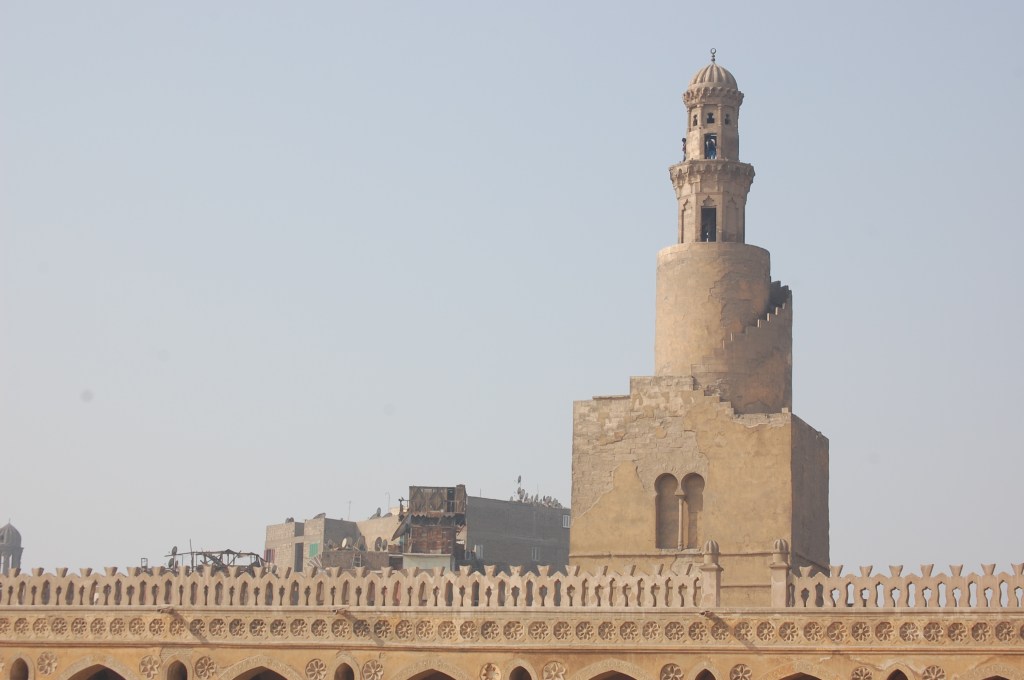
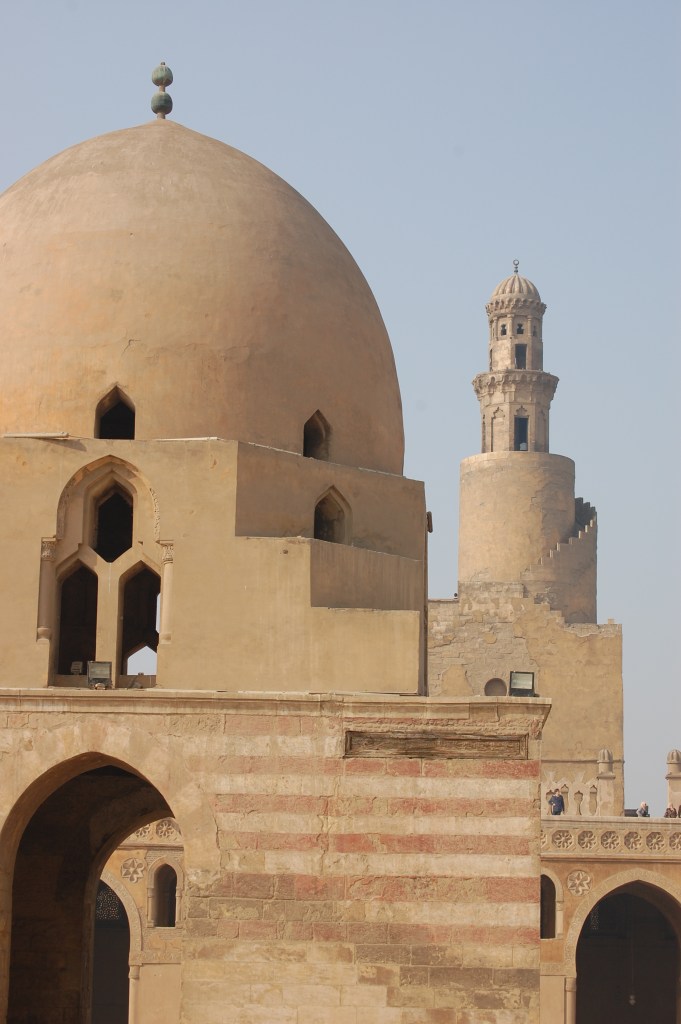
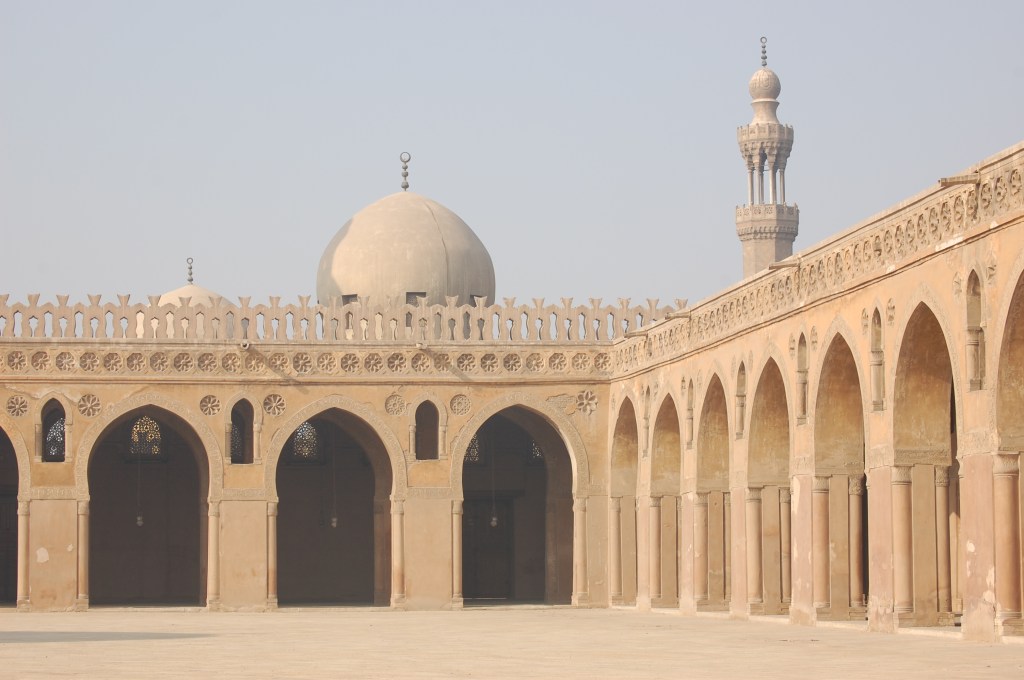
The Mosque of Ibn Tulun is enormous, covering 23,318 square-meters. The brick walls are 33 feet high and a unique minaret spirals up from the northwest wall. It is a large square mosque with an open sahn, and a secondary wall around the exterior. The walls are topped with ornate cresting, which stand out from the sandy brick.
At first glance it is very apparent that this mosque is old! The brick is more worn, the design is more simplistic, and the wear demonstrates that it is almost 500 years older than the mosque of Sultan Hassan. It is open to view, and it used to be free, though the men who sit at the door and distribute the canvas booties for your shoes might ask for a tip, or for some money for admission. I never argued or haggled with them, they were always nice, and everyone in Egypt needs money.
Walk up the stairs and through the gate of the exterior wall and then up the stairs again to the gate into the mosque. The men there will give you your booties so you can wander the mosque, or you can take your shoes off (which might be a more respectful thing to do) but it’s very dirty, and the stone floor will be very uncomfortable. You can tip them when you get the booties, or after you return them, they will probably ask.
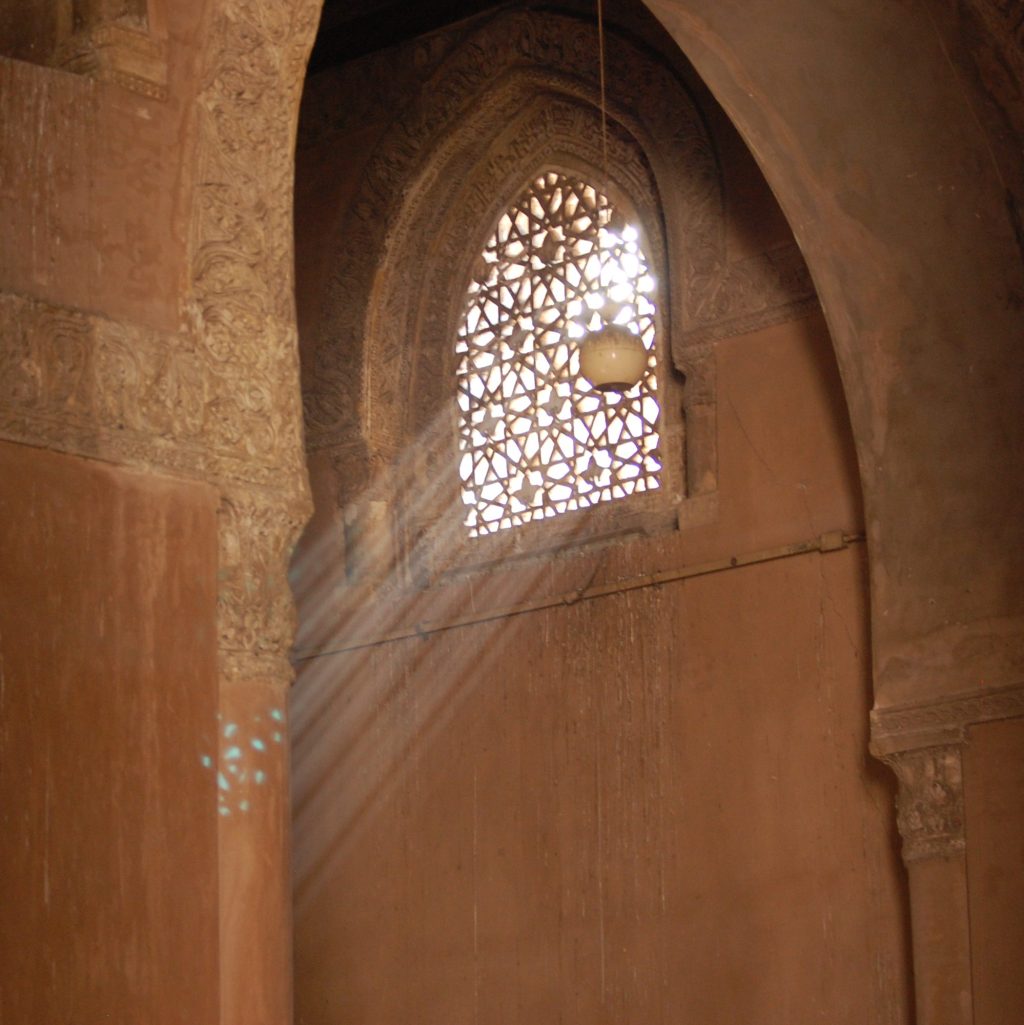
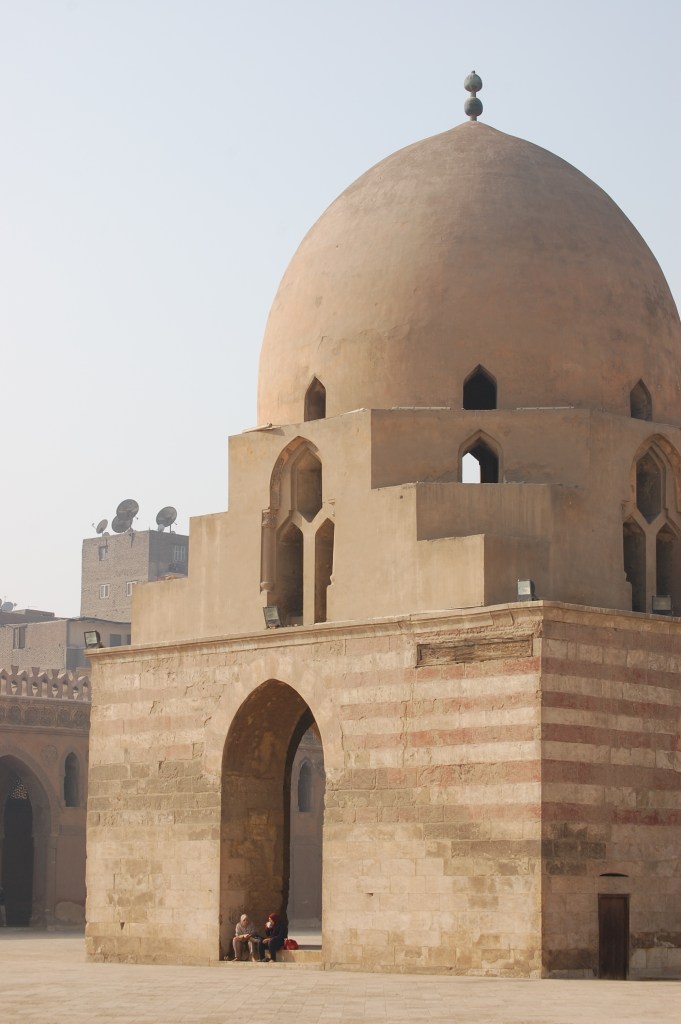
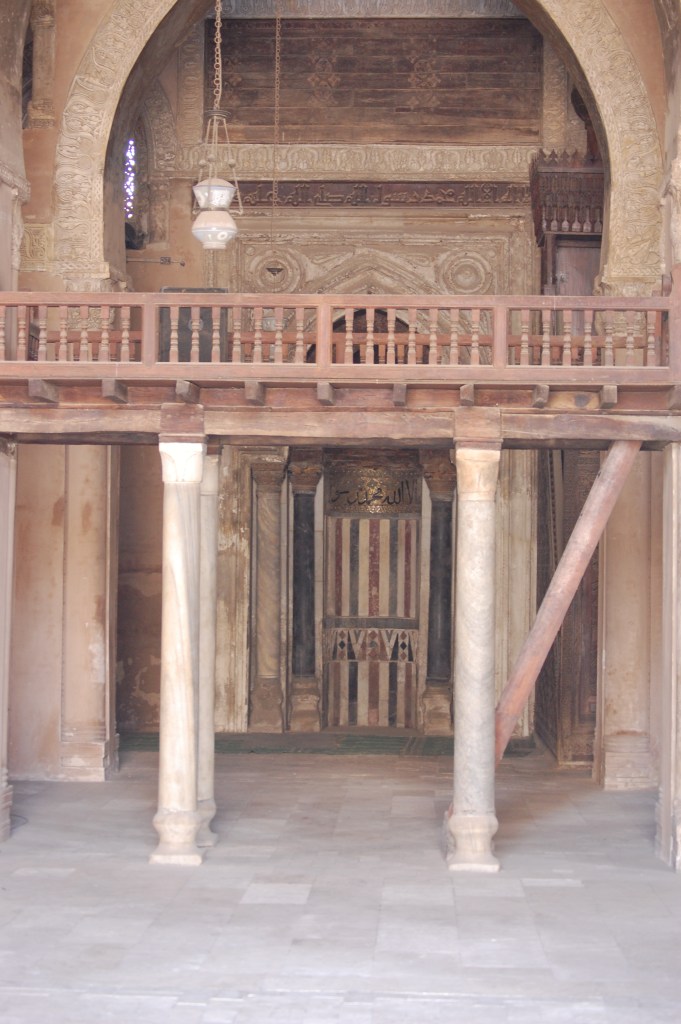
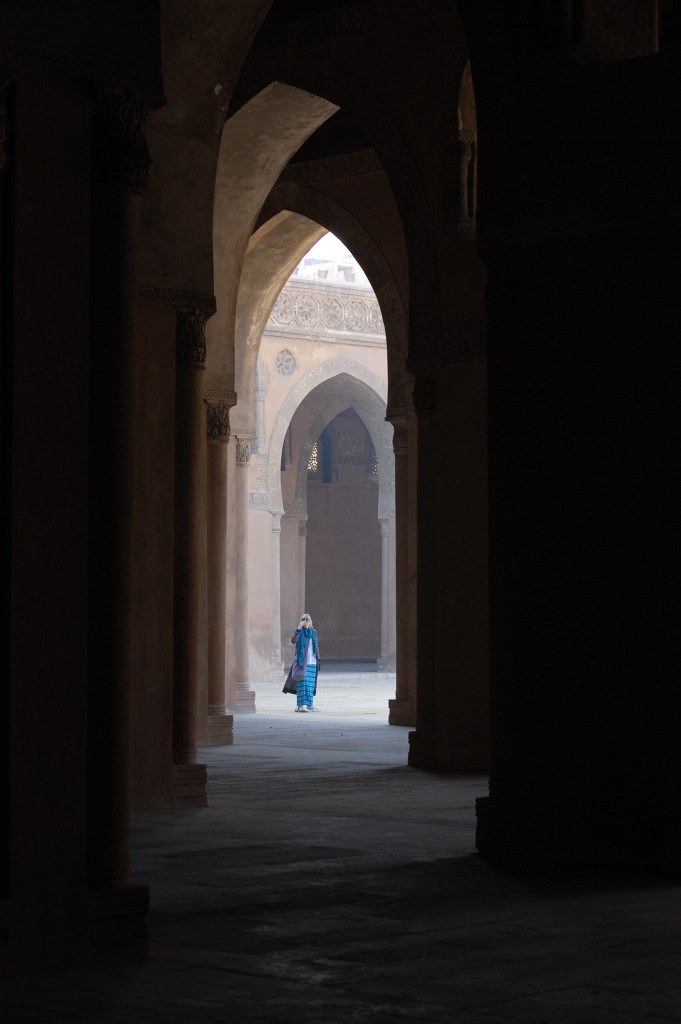
The mosque is a giant open sahn (courtyard) with arched corridors surrounding an open square. In the center is a very large ablution fountain under a tall dome. The arched corridors on three sides have two rows of arches, and the side of the qibla has five rows of arches. The mosque is brick covered in stucco with some stone and wood elements scattered around. You can see some of the carved wood with inscriptions along the ceiling, and there is wonderful detail work in the arches. The windows are mostly reproductions, but there are a few originals.
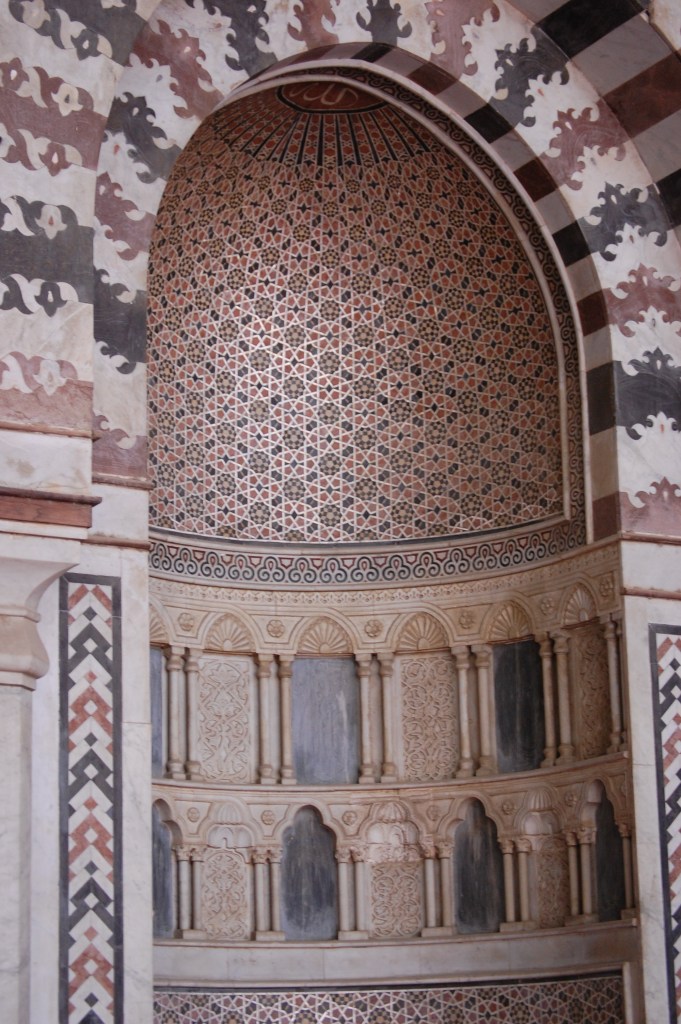
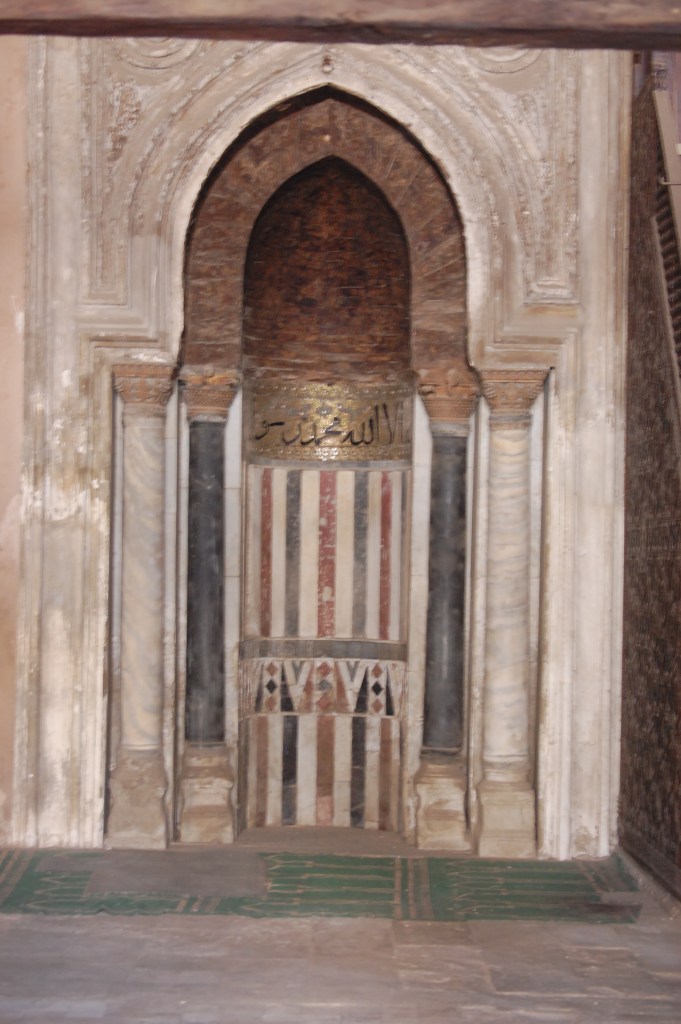
The arches give a wonderful geometric depth to the mosque as you wander around. There’s no shortage of great photos, and a real sense of order and peace inside that space. The mihrab features ornate stone patterns and is flanked by a tall elaborately carved wooden minbar. There is also a wooden platform supported by small marble pillars called a dikka where the Quran is recited. If you look on either side there are beautiful carvings on the piers.
Spend as much time as you want in the mosque. There are benches scattered around where you can sit, and it usually is not very crowded. I always enjoyed making a full loop of the corridors and sitting for a while watching the pigeons fly around.
When you are done in the mosque, go back to the door and turn in your foot coverings, and ask the men there if you can go see the minaret. They may ask for an extra tip, but it’s worth it. They will walk you back around the end of the mosque, open a gate to a staircase that will lead you up the spiral minaret.
Cairo is called the city of a thousand minarets, but the one at Ibn Tulun is unique. Its spiral shape is reminiscent of the minaret in Samarra (in Iraq) and with it perched on the square base also seems to have been inspired by the lighthouse at Alexandria. Which would have still been standing when the mosque was built.
The stairs start very wide as you climb up, but they get narrower with each segment. At the top of the square section you can turn left to go further up the minaret, or you can turn right and walk out on the roof of the mosque itself and look down into the sahn. I walked all the way around it a few times, and was never told not to.
The next section of the minaret spirals upwards, and there are not good hand holds. It also gets quite high at this point, so if you are uncomfortable with heights, or if you don’t feel particularly sure-footed, it might be best not to continue. It also gets narrower as you climb up. The final section into the top of the minaret it quite tight, and the steps are very awkward. There is not a lot of space up there for multiple people so if there are other folks around, make sure to be conscious of their time.
It is a wonderful place to see Cairo. You can peek down onto rooftop verandas where Cairene’s spend their time. You can see the pigeon houses where hobbyists keep their pet birds, and on rare clear days you can see to the Nile river and the Giza plateau. The man with the key will be waiting for you at the bottom, so don’t stay too long, but make sure to soak it in a little. It’s about as good as Cairo gets.
Be careful on your way down, again, there aren’t really any hand holds and it’s quite high. When you get to the bottom, if you didn’t already, make sure to tip the man with the key.
You can call an Uber from the mosque, or you can catch a taxi. It will be easier to catch one on the Al Saleeba road since there is more traffic.
4. Extra!
If you still have energy after all that walking, here are a couple of extra things you can do.
There is another interesting site at the Mosque, which is the Gayer Anderson Museum, which is basically attached to the Mosque itself.
Gayer Anderson was a British army officer whose house has been maintained as a museum. It is full of wonderful artwork, furniture, historic artifacts, and other items of interest that he collected over his life in Egypt. It is a wonderful example of a British colonial house and was used as a setting in a the James Bond film “The Spy Who Loved Me”. Actually, The Mosque of Ibn Tulun has a very brief appearance in that film as well.
This museum is really wonderful in terms of the artifacts, but all the times I have been there the guide they have assigned me rushed me constantly and was really annoying. It’s worth seeing if you have the time, but be prepared for the guide.
If you’re feeling particularly adventurous, it’s kind of fun to stop at a street cafe for some tea. You can just order by asking for “Shay nyah nyah” which is black tea with mint. Load it up with sugar and you’ll be one of the locals (almost).
I am from the United States (specifically from Wyoming). From 2015 to 2017, I had the incredible opportunity to call Egypt home. It’s been years since I left, but the country, with its stunning landscapes, rich history, vibrant culture, and, most importantly, its people is still in my heart.
I decided to start this blog (“Across the Sand”) because people constantly ask me, “What should I see in Egypt?” Every time, I find myself writing and writing because there’s just so much to say about this fascinating place. Writing a blog felt like the perfect way to share my recommendations and memories while connecting with others who are curious about the land of pyramids and the Nile.
Egypt is more than just ancient temples and bustling bazaars (though those are amazing, too). It’s a place that touches every part of history. The past and present coexist in ways that challenge and inspire. The warmth of the people, the beauty of the sites, and the unique perspective you gain from visiting will expand your understanding of the world and its stories.
Through this blog, I’ll take you on a journey across Egypt’s sands—sharing must-see destinations, hidden gems, travel tips, and personal anecdotes from my time there. Whether you’re planning your first trip, dreaming of visiting someday, or simply curious, I hope these posts inspire you to explore this incredible country.
So, come along and let’s discover Egypt together. Welcome to “Across the Sand!”



 Across the Sand