Notes!
- This trip will take four to five hours
- Bring good walking shoes
- Bring water
- Bring tip money
- Photos are allowed in most of these places but there might be an extra charge
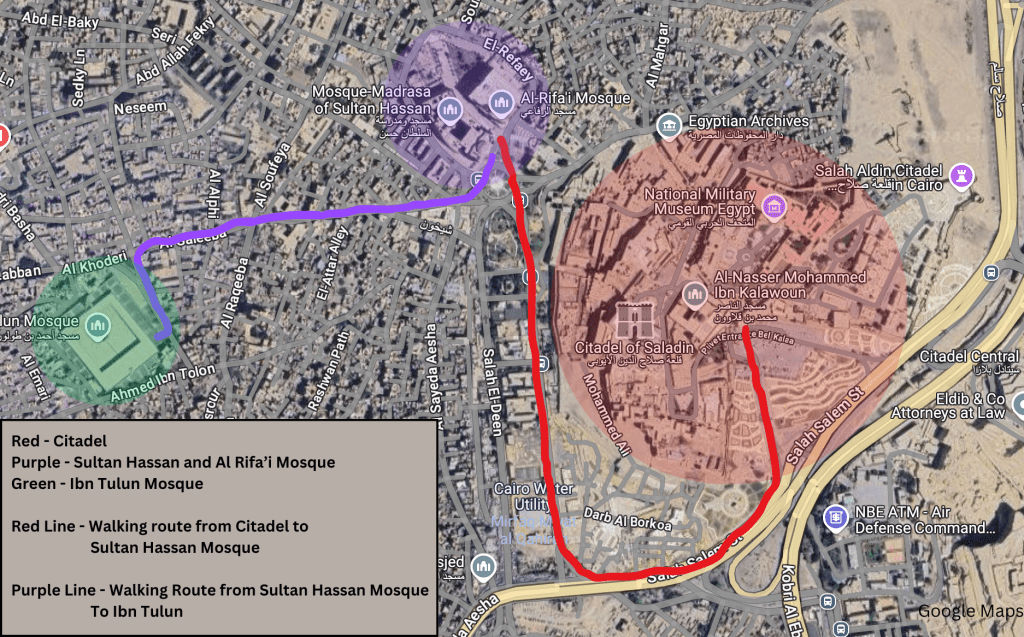
Walking map at the bottom of the page!
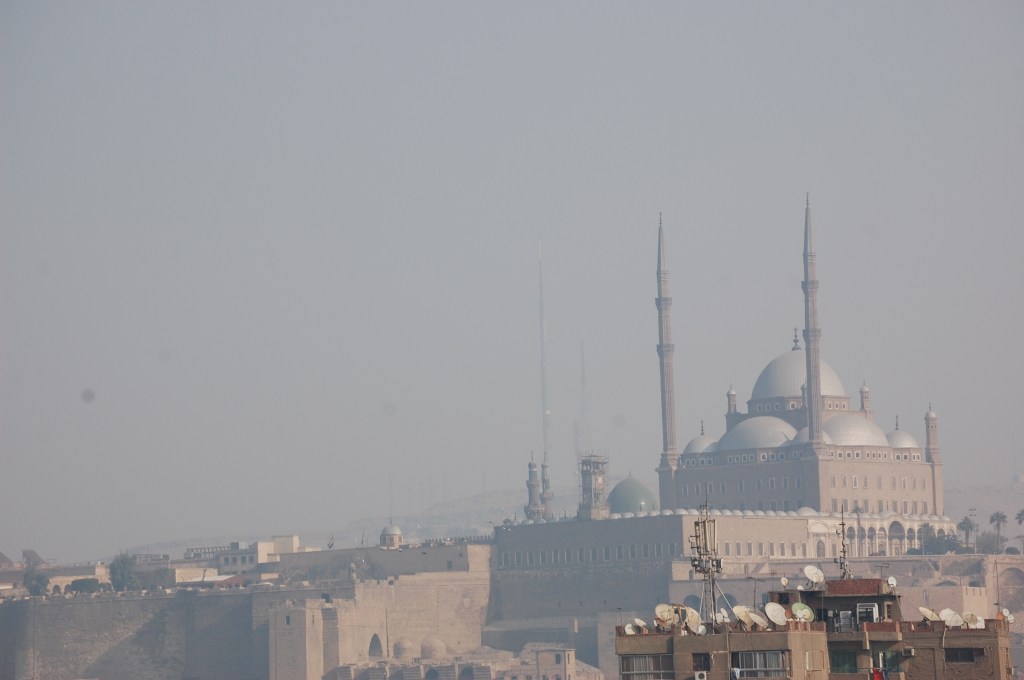
The Citadel of Cairo dominates the skyline of the city. The picturesque Mosque of Muhammed Ali Pasha is iconic with it’s mounded domes and tall slender minarets. It pops out between the apartment buildings and at the end of streets as you wander around bustling Cairo.
It was built by Saladin in the 1100s (though not finished during his lifetime) and was a defensive fortress and palace for him. It was the center of power in Egypt from the era of Saladin until the mid-1800s when Khedive Ismail moved to the Abdeen Palace in downtown Cairo. It was the site of many historic events during the Islamic era of Egypt’s history including the 1811 massacre of the Mamlukes by Mohamed Ali Pasha.
The Citadel is a large castle built on a promontory below the Mokkatum cliffs in Cairo. It was a very defensible position, with a broad view of the entirety of Modern Cairo (and certainly all of ancient Cairo.) It’s tall stone walls joined the city walls of Cairo which made a strong fortress city that was the center of Egyptian government for about a millennium. It is still there looming over the modern city of Cairo.
1. Citadel & Al-Nasser Mohammed Ibn Kalwoun Mosque
You can access the Citadel on Salah Salem street. It is an operating military base as well as a museum, tourism, and religious destination, so there are security measures. You can have your driver drop you off at the bottom of the hill and you can walk up to the entrance. There is a metal detector and security checkpoint that you will have to go through. I can sometimes be quite busy, but they usually move fairly quickly.
There is a lot to see in the Citadel itself. There are museums related to Egypt’s modern governmental history including the National Military Museum, the National Police Museum, and the Citadel’s Prison Museum. These might not be of particular interest to most tourists visiting Egypt, but if you have extra days it is always interesting to see how countries view themselves by visiting their national museums. However, I would avoid those if you want to see the older and (in my opinion) more interesting Islamic sites.
Once you are through the gate, walk up the hill and follow the wall on your right around the corner until you find the entrance to the Al-Nasser Mohammed Ibn Kalwoun Mosque. Take your shoes off before entering, and ladies need to cover their heads. IMPORTANT!!! DO NOT WEAR YOUR SHOES IN A MOSQUE!!!
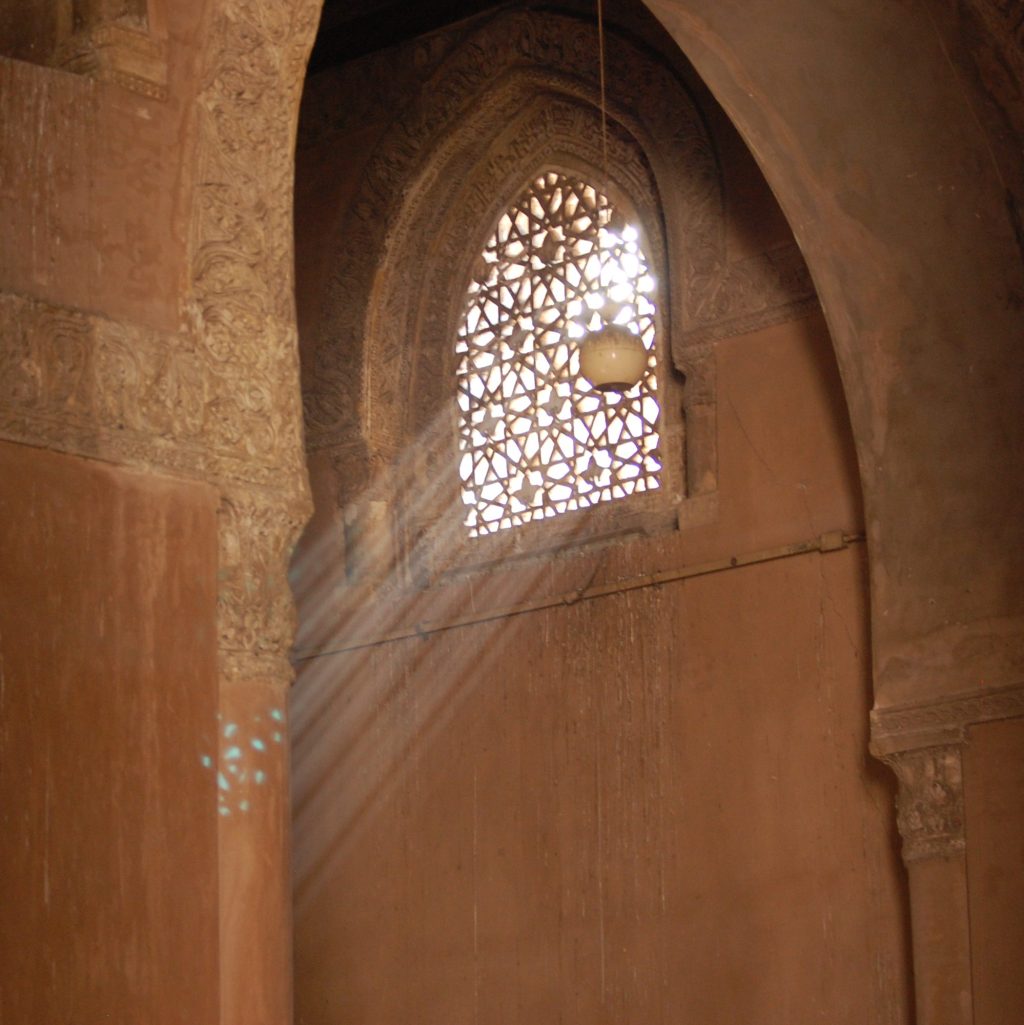
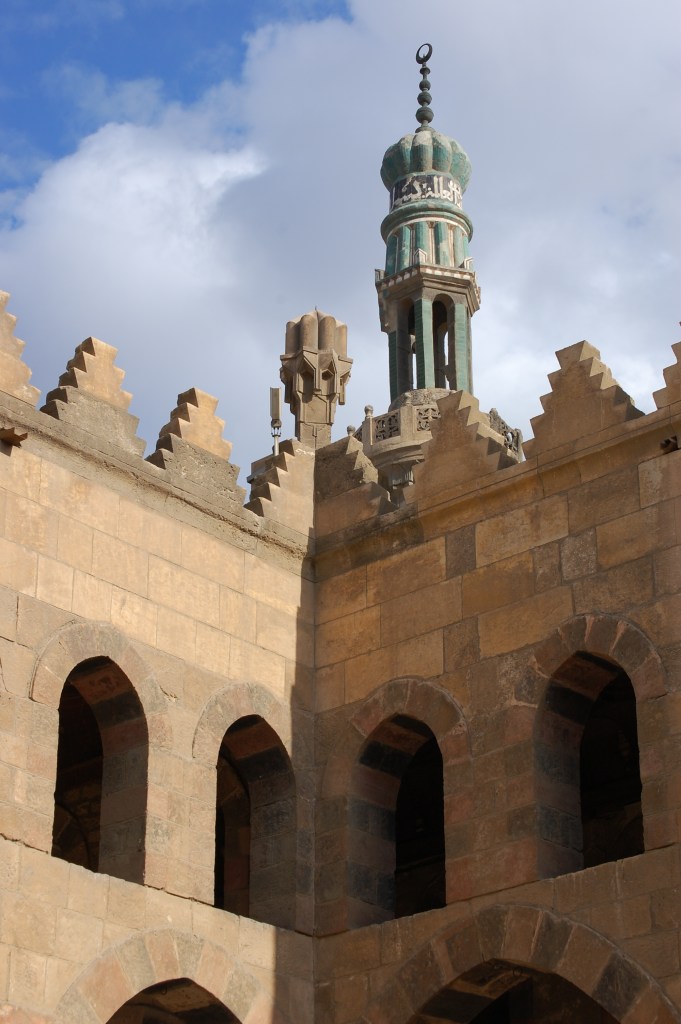
Though it’s not as picturesque from the outside the Mosque of Al-Nasser Mohmmed Ibn Kalwoun is very interesting. It was built in 1318 by the Mamluks and was the royal mosque of Egypt where the leaders would perform their Friday prayers. It has an open sahn (essentially a courtyard) surrounded by pillar supported arches. Some of the stone used in the construction of the mosque was taken from ancient pharaonic sites around the Cairo area. You can see the large dome supported by granite columns that were taken from ancient Egyptian temples. If you look around for other stone elements that look similar it’s likely that those came from ancient temples as well. An earthquake near the island of Crete caused widespread damage in Egypt in 1303. The limestone covering of the pyramids was shaken off, many buildings and minarets in Cairo and Alexandria were toppled, and the great Lighthouse of Alexandria was damaged so badly it eventually came down as well. Many buildings in Cairo feature stone from sites that were destroyed during that quake. It features a lot of wonderful Mamluk architectural elements, and a beautiful traditional layout.

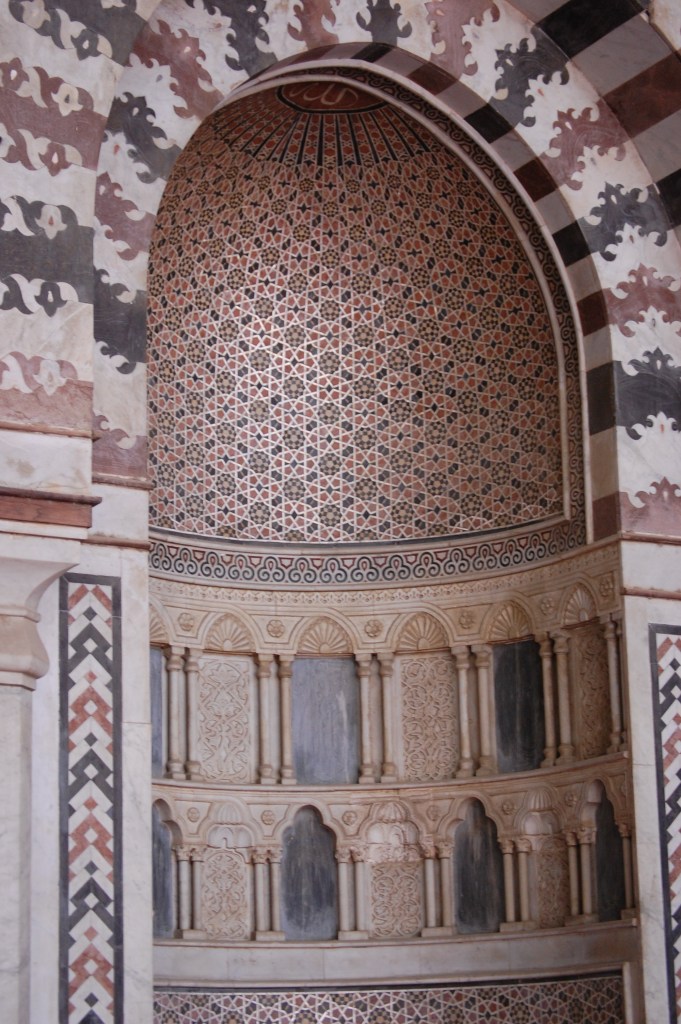
2. Mosque of Mohamed Ali – CitadelDay Trips
From there, head to the west into the big open area in front of the Mosque of Muhammed Ali Pasha. The other museums are opposite of the mosque if you decide you want to see them, but if not, head towards the door to the sahn at the mosque. Sometimes there are little shoe-cover booties you can wear, but I always take my shoes off when I walk around this mosque. I carry them with me, because I usually go out a different door than where I go in. I also try not to set them down on the ground in the mosque. If you need a free hand, tie the shoelaces together and hang them over your shoulder or put them in your bag.
Muhammed Ali Pasha was the first Khedive of Egypt and the founder of modern Egypt. He was responsible for the purge of the Mamluks and for breaking Egypt away from the Ottoman Empire. His descendants ruled Egypt until the 1950s (albeit under British occupation from 1879-1956). He modernized their military, worked to build a modern government structure, and restructure Egyptian society. His legacy is disputed, but there is no doubt that the mosque of Muhammed Ali is one of the most striking in the whole of Egypt.
Built over eighteen years starting in 1830, the mosque features and exterior sahn, and a large, elaborately decorated, domed interior. The alabaster exterior has turned brown over the centuries of dust and smog, but you can see through all of that to the beauty underneath if you squint your eyes hard enough. The ornate arches around the perimeter frame elaborate windows where views of Cairo peek through. It’s worth a slow stroll around the sahn to see the vistas through the windows. On clear days (of which there aren’t many) you can see the pyramids on the horizon. The large clock was given to Muhammed Ali by King Louis Phillipe of France in the late 1830s.
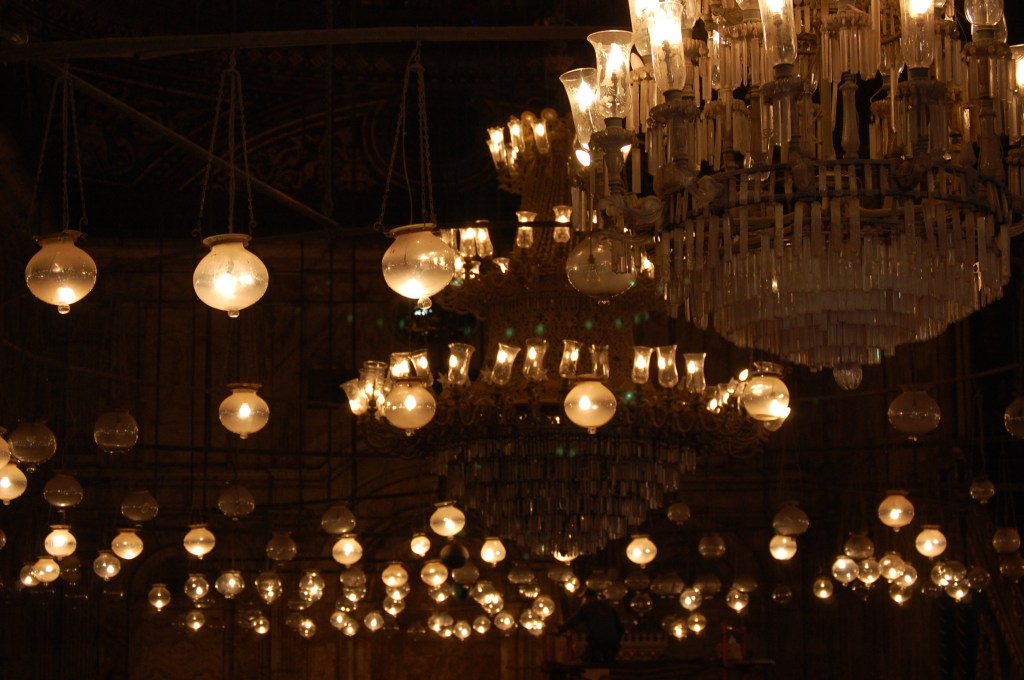
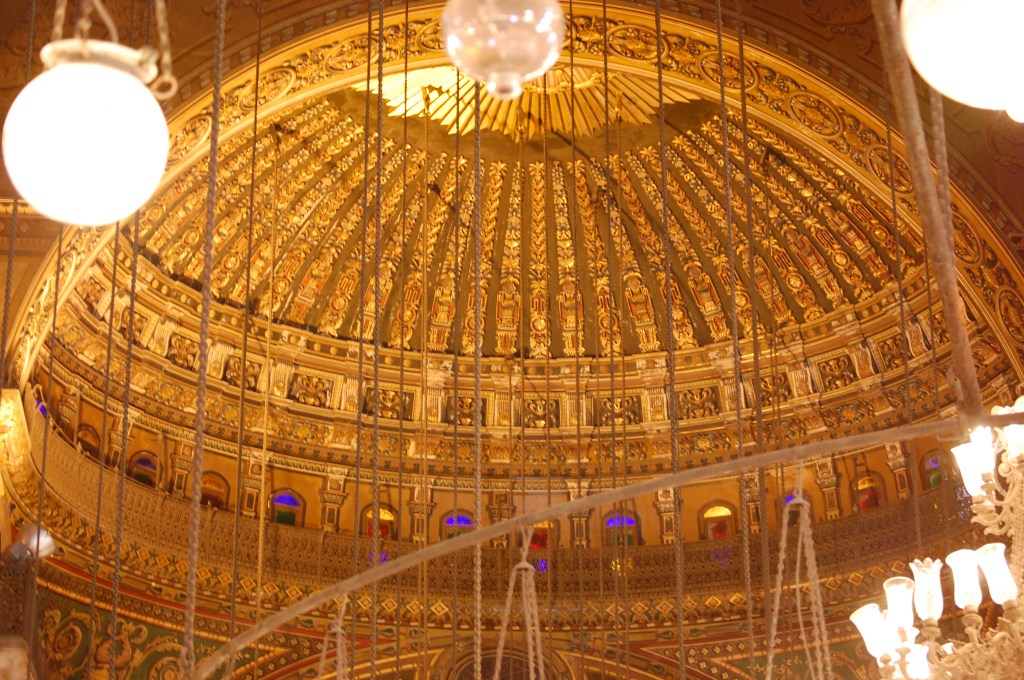
Inside the enormous domed room in the mosque there are many striking architectural features. The cascading domes create a unique geometric ceiling, supported by decorated alabaster columns. There are enormous circular chandeliers orbiting each other in the center of the room. It’s a striking cavernous place with beautiful decoration on all sides. There is a tall minbar (pulpit) off to the right as you face the qibla (wall pointing towards Mecca) and a smaller minbar next to the mihrab (a niche in the qibla wall that is ornately decorated.) There are usually lots of people in the mosque including school groups, families, and others. I remember that it was often local Egyptians visiting.
Out the door to the west, there is a nice overlook of Cairo. You can see many of the other old mosques, and (on a rare clear day) the pyramids way off in the distance. It’s a good place to get your bearings about where you will be walking. You can see the old gate of the citadel called Bab El Azab (bab means “gate”) which is near two of the other mosques I will be discussing in this piece. You can also see the beautiful (and ancient) mosque of Ibn Tulun. It is a square mosque peeking out from the chaotic concrete buildings of modern Cairo. It is straight west of the Muhammed Ali Mosque.
I always thought this was a good place to sit and look at the city for a while and just soak in Cairo. You can get a good feel for what’s going on in the modern city, and you can almost visualize what the ancient Islamic city must have been like. Most of the oldest parts of Cairo are to the north of the Citadel and it is hard to see them from the vantage point to the west of the mosque, but there is a lot to look at, and it’s nice. Buy a coke and hang out for a little bit.
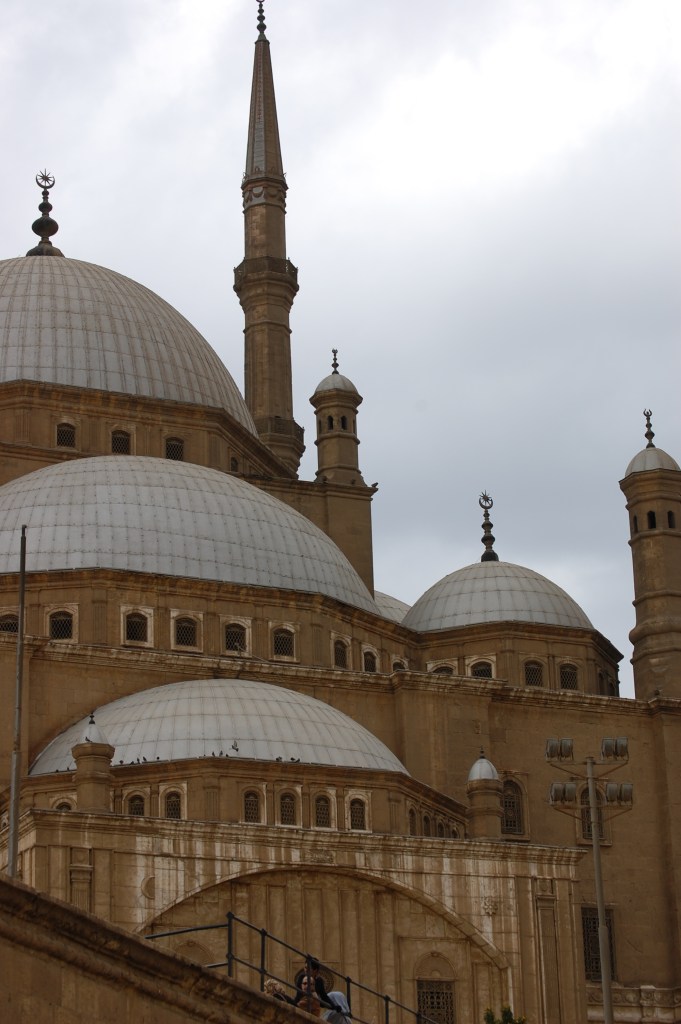

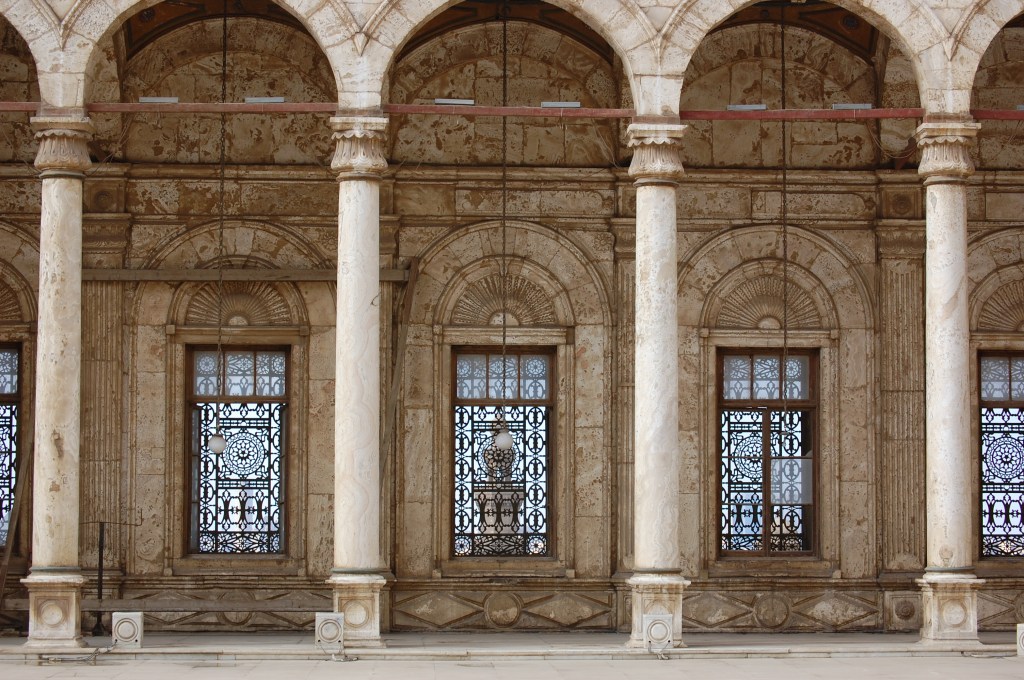
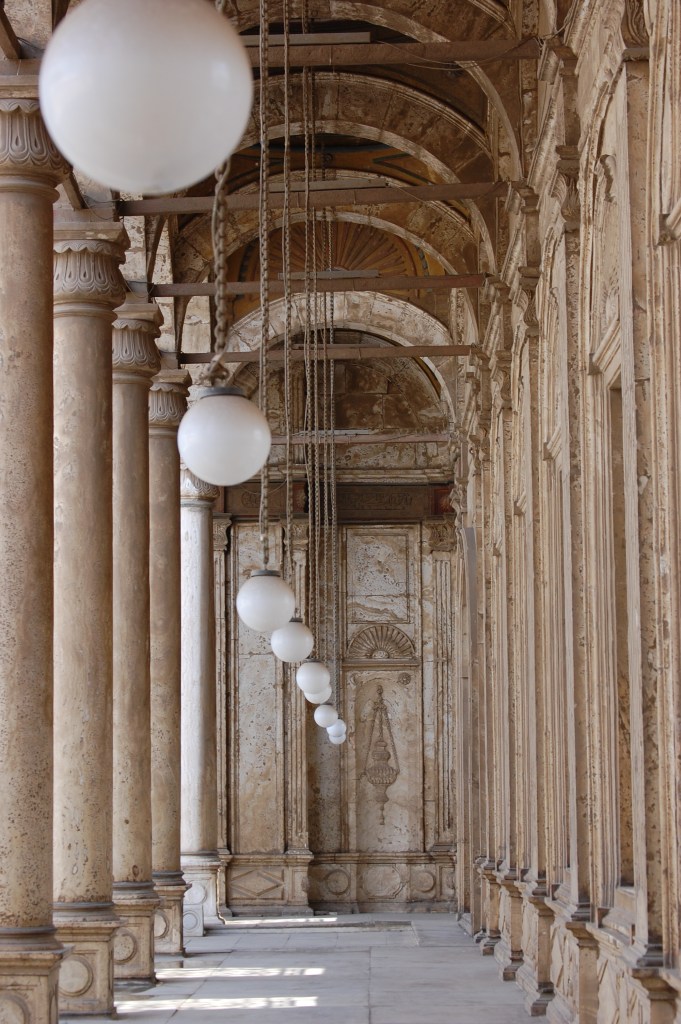
3. Mosque-Madrassa of Sultan Hassan & Al-Rifa’i Mosque
Once you have spent enough time looking out at the city and you feel like you have your bearings, make your way back to the entrance of the citadel (where the metal detector was.) If you are adventurous, and are up for a bit of a walk, and if it’s not too hot, you can turn to your right and walk along Salah Salem Street, down the hill, and turn right on Salah El-Deen street, which will bring you under the looming walls of the citadel and into Salah El-Deen Square which is right in front of Bab El Azab, the big gate to the citadel.
I’m not sure what it’s like now, but I remember it was lined with auto-mechanics fixing cars or tires. I never felt unsafe walking there, but it’s probably always a good idea to have a buddy along with you when you’re walking around. That’s probably decent advice for any city, but especially one where you don’t speak the language.
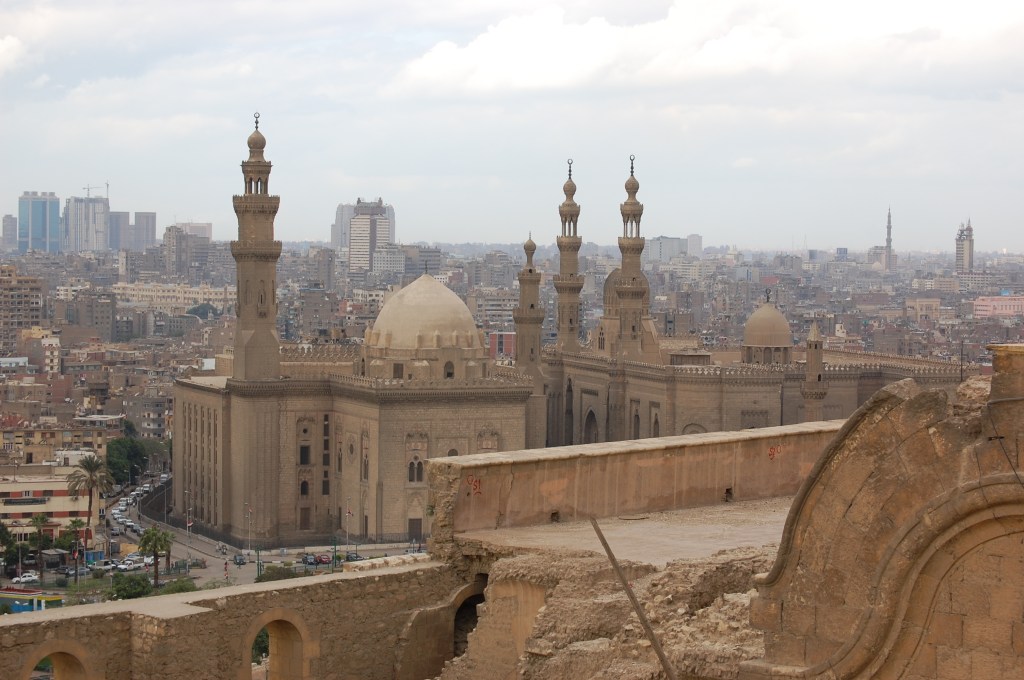
If you need a rest, there are some nice places to sit in the Sultan Hassan & Al-Rifai Mosque compound. It’s another good place to soak in the views of Cairo, especially looking up at the lithic citadel.
You will need to purchase a ticket at the booth between the two mosques, then make your way back to the angled entrance, with the unbelievable entrance portal at the top of the landing. The mosque with the angled entrance portal is the mosque of Sultan Hassan, and the other is the mosque of Al Rifa’i.
The two mosques compliment each other well, and it almost seems as if they were always next to each other, but this is not the case. The Mosque-Madrassa of Sultan Hassan is almost 600 years older than the neighboring Al-Rifa’i mosque. The Hassan mosque was built in the mid-1300s and the Al Rifa’i mosque was finished in 1912 in a style that matches.
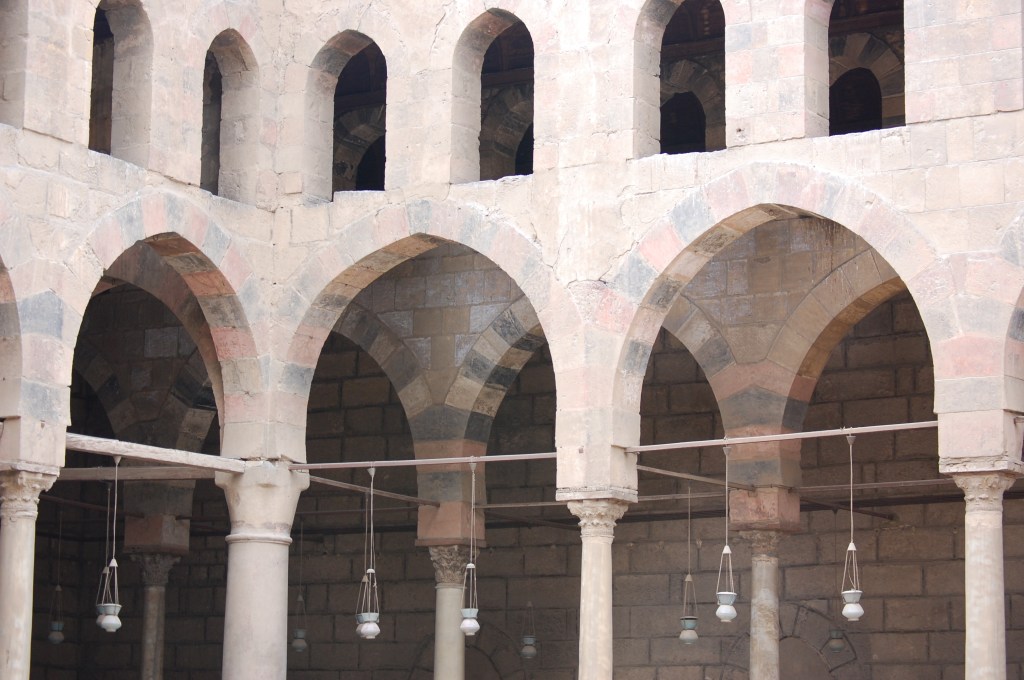
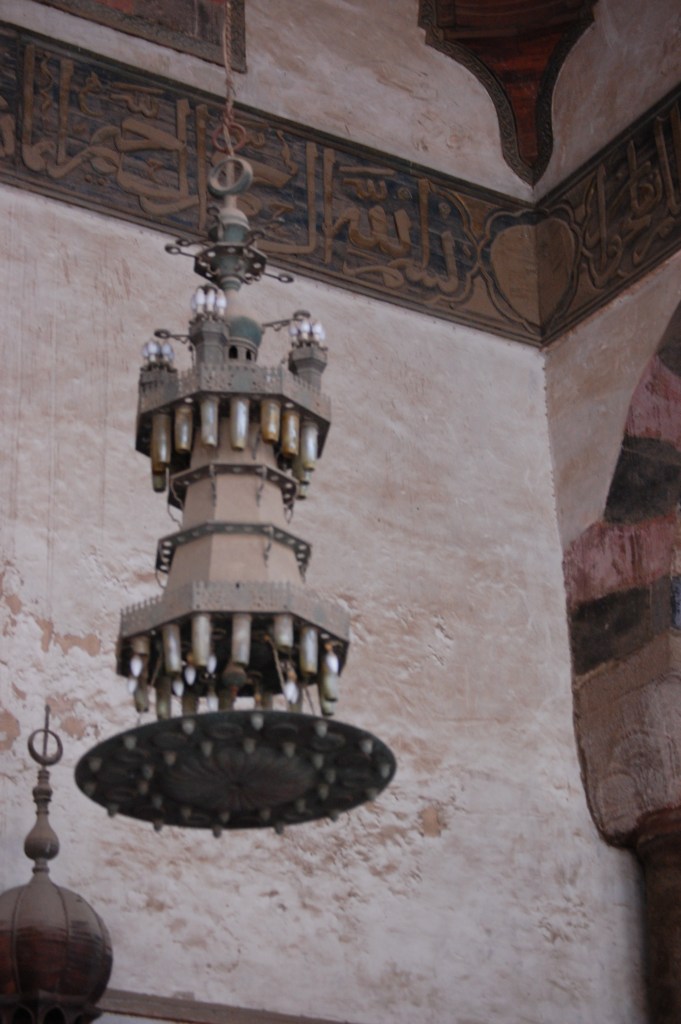
The Sultan Hassan mosque was one of the most expensive mosques in Cairo when it was built and was a school as well as a place of worship (a madrassa is a school, and often refers to a religious school.) It is a large stone and brick building with thick walls and winding corridors that lead to a large open sahn surrounded by large open iwans (large covered areas that are open to the courtyard. The iwans are decorated with several lanterns hanging from long chains, and there is a central ablusion fountain in the center of the sahn. It is a beautiful mosque with stunning decoration and spectacular medieval architecture.
The Al-Rifa’i mosque is associated with the Rifa’i order, which is a Sufi order within Sunni Islam. One of that movement’s most important figures, Ali Abu Shubbak, is buried there. It is a similar size to the Sultan Hassan mosque, but it is much newer and is fully enclosed. It’s enormous arched interior is dark in comparison to the open sahn at the center of the Sultan Hassan Mosque, but it it monumental and beautiful, though maybe not as beautiful as the Sultan Hassan Mosque next door.
Besides Alu Abu Shubbak, the Mosque of Al-Rifa’i is also the burial place of several other historic figures that might be of interest. The Khedive Ismail Pasha, three of his wives, and two of his children are buried there. Sultan Hussein Kamal, King Fuad I, and King Farouk are buried there as well. Perhaps, most surprisingly to visitors, Shah Mohamed Reza Pahlavi of Iran was buried there after his death in Cairo in 1980 following his exile from Iran. His father, Reza Shah Pahlavi, was also temporarily interred there until his body was returned to Iran in 1950.
If seeing both of these mosques seems too overwhelming, or if you are short on time, don’t miss the Sultan Hassan Mosque. In my opinion it is much more beautiful and historically significant than the Mosque of Al Rifa’i.
4. Sheikhoun Road/Saleeba Street
It is a similar distance to walk from the Sultan Hassan Mosque to the Mosque of Ibn Tulun as it was to walk from the citadel entrance down to the Sultan Hassan Mosque. You could catch a cab or an Uber if you want, but it’s fun to stroll through the neighborhoods and witness the day to day of Cairo life.
To get to Ibn Tulun from Sultan Hassan mosque, go to the south west corner of the Salah El-Deen square and find Sheikoun Road which is also Saleeba Street or Al Saleeba. It starts near the post office. Sometimes the road signs are hard to see (if the exist at all) but they are often posted on the corners of buildings. Once you find the road, head away from the Citadel and towards the Nile.
There are several sites along Sheikoun Road that are worth seeing, but there’s not necessarily a need to stop at any of them. Just observing as you walk by will be enough. For instance, not far from the start of the road is the Sabil-Kuttab of Sultan Qaitbay. It is a beautiful historic building from the 1400s. A sabil (sabeel) is a public fountain where the neighborhood got its water before the modern era of plumbing. The kuttub is a primary school that teaches the Quar’an. It’s a beautiful building with ornate stonework that’s worth pausing for.
About halfway between Sultan Hassan Mosque and Ibn Tulun is the mosque of Prince Sheikoun (or Shaykhu). It was built in the mid 1300s and is very beautiful. (It’s worth seeing if you have lots of extra time, but if you don’t you should continue on to Ibn Tulun.) Regardless, stop for a minute to see the beautiful mashrabaya (wood lattice balconies) on the mosque and the house near it. Mashrabaya used to be commonplace in Cairo, but there are fewer and fewer of them these days. It’s worth a pause.
A little further on the north side of the road you can see the Sabil Umm Abbass, an Ottoman era water fountain that is beautifully decorated with ornate floral patterns, and marble work. It is closed, but quite picturesque and worth another short pause.
The road is pretty rough, and the sidewalks (like in much of Egypt) are either poorly maintained, or non-existant. You will have to walk in the street for much of the time, and traffic can be crowded depending on the day. Keep your eyes open, be patient, and just keep going. It’s fun to see these neighborhoods, but also difficult since the poverty or Egypt is often on display. Like a lot of places, you have to learn to look past the trash and disrepair to see the beauty and history of the place. In my recollection there are a lot of mechanic shops on this road as well, and not many cafes or shops.
This road will take you right to the Mosque of Ibn Tulun. You won’t miss it. It is enormous, and clearly ancient. When you get there, walk south along the road until you find the entrance to the mosque.
4. The Mosque of Ibn Tulun
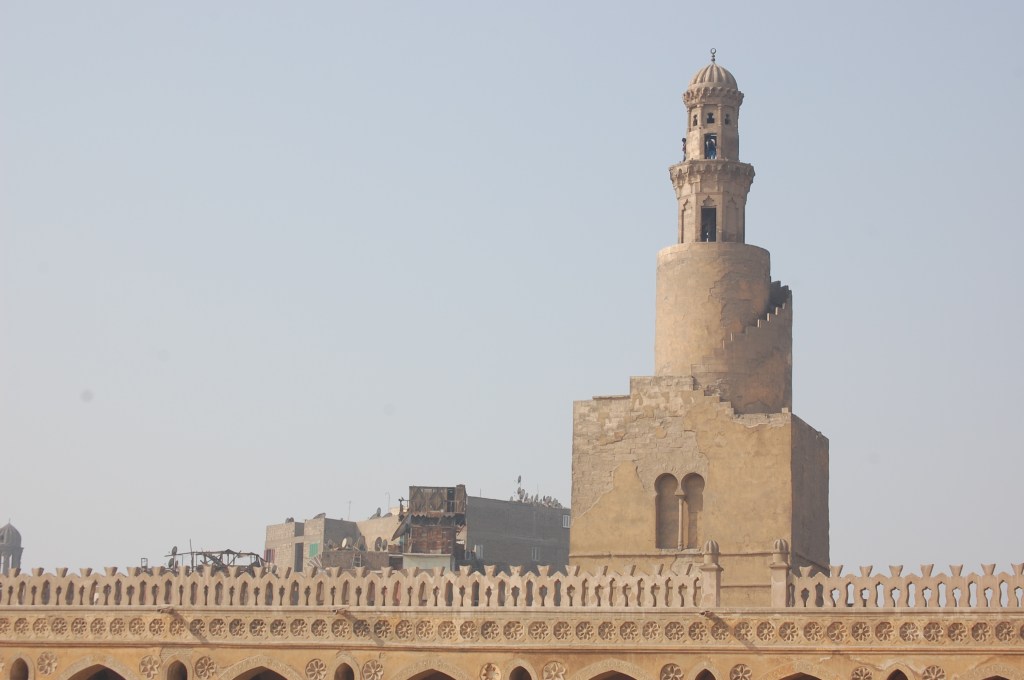
I think this is a place that every visitor to Cairo needs to see. In fact, if you only have time to do one of the things on this list, you should absolutely skip everything else and just go see this mosque. It is one of the oldest mosques in Eqypt, which makes it one of the oldest mosques in Africa. It was built between 868 and 884CE and is still in its original form (mostly) though there has been significant restoration conducted over the years.
Ahmad Ibn Tulun was the Abbasid governor for Egypt from 868-884. During that time he oversaw the construction of this enormous mosque outside of Fostat, the initial Islamic settlement in the area. An earlier mosque had been constructed near the Roman Fortress on the Nile by the Islamic invader who had conquered the fort in the 600s, Amr Ibn Al-As (remnants of which still stand.)
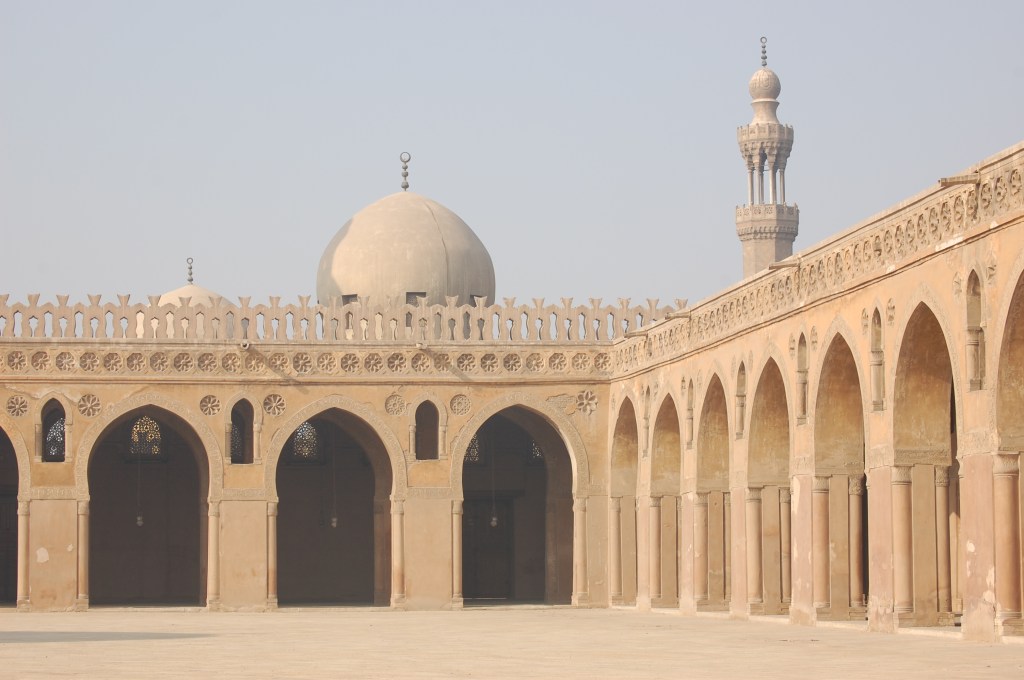
The Mosque of Ibn Tulun is enormous, covering 23,318 square-meters. The brick walls are 33 feet high and a unique minaret spirals up from the northwest wall. It is a large square mosque with an open sahn, and a secondary wall around the exterior. The walls are topped with ornate cresting, which stand out from the sandy brick.
At first glance it is very apparent that this mosque is old! The brick is more worn, the design is more simplistic, and the wear demonstrates that it is almost 500 years older than the mosque of Sultan Hassan. It is open to view, and it used to be free, though the men who sit at the door and distribute the canvas booties for your shoes might ask for a tip, or for some money for admission. I never argued or haggled with them, they were always nice, and everyone in Egypt needs money.
Walk up the stairs and through the gate of the exterior wall and then up the stairs again to the gate into the mosque. The men there will give you your booties so you can wander the mosque, or you can take your shoes off (which might be a more respectful thing to do) but it’s very dirty, and the stone floor will be very uncomfortable. You can tip them when you get the booties, or after you return them, they will probably ask.
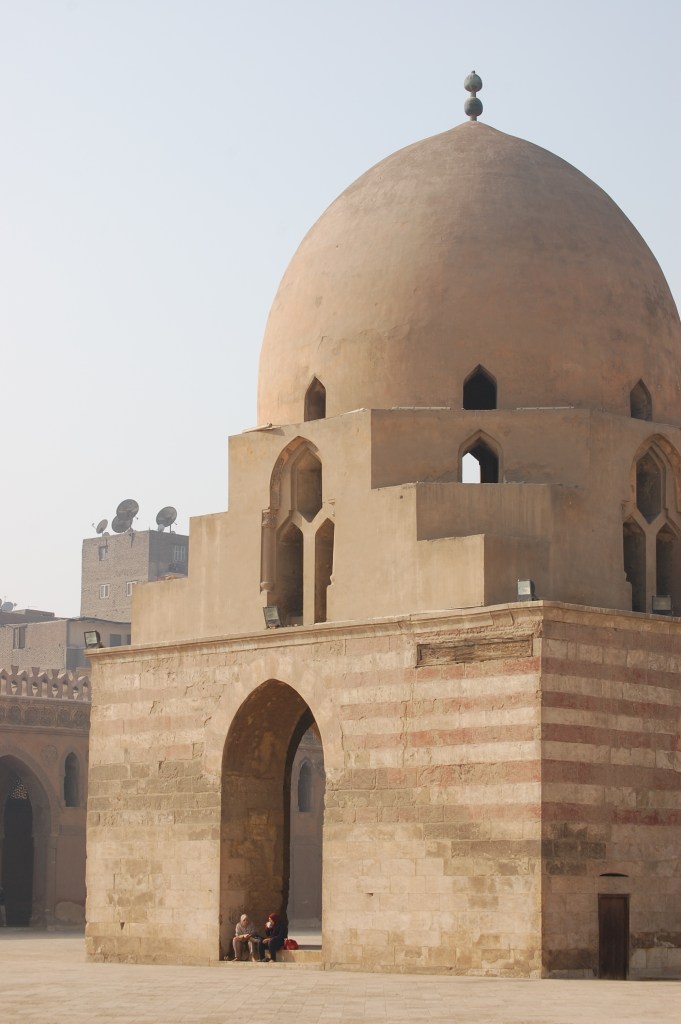
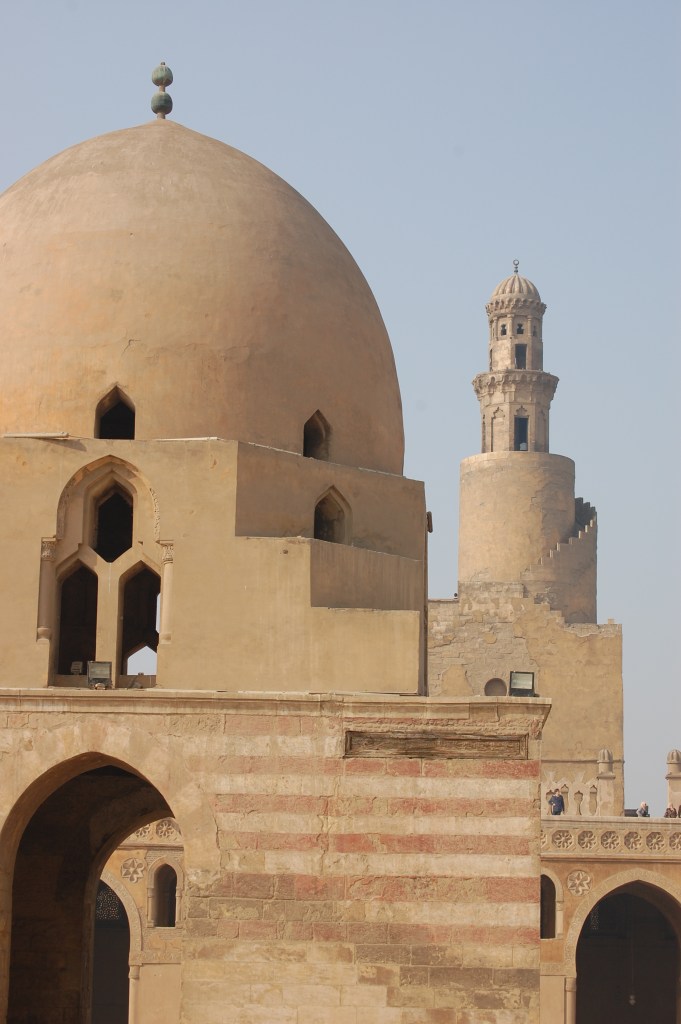
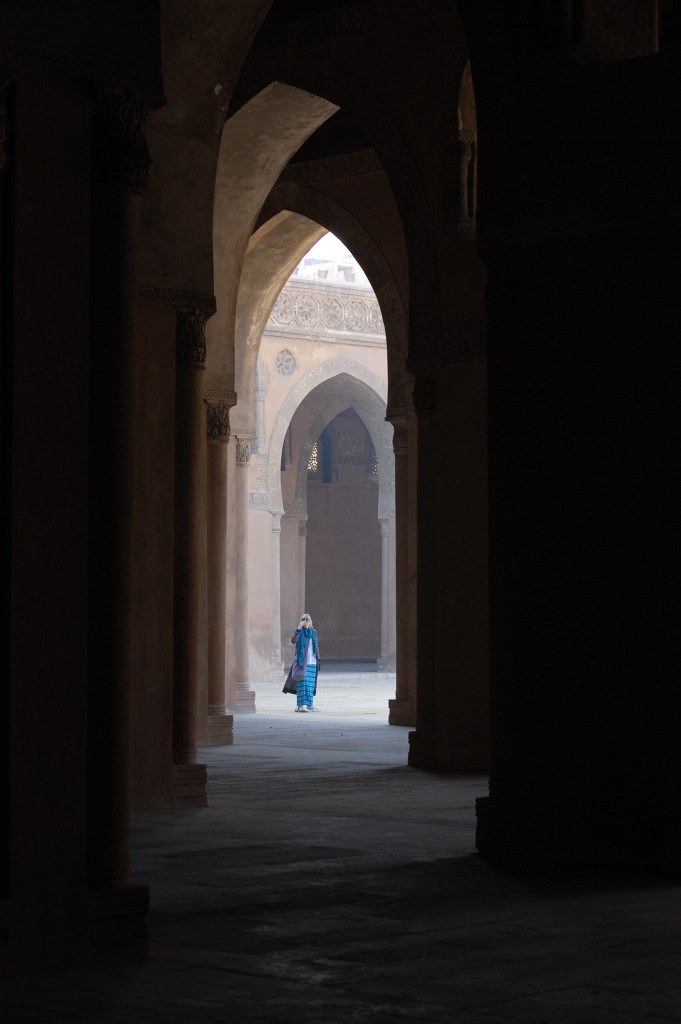
The mosque is a giant open sahn (courtyard) with arched corridors surrounding an open square. In the center is a very large ablution fountain under a tall dome. The arched corridors on three sides have two rows of arches, and the side of the qibla has five rows of arches. The mosque is brick covered in stucco with some stone and wood elements scattered around. You can see some of the carved wood with inscriptions along the ceiling, and there is wonderful detail work in the arches. The windows are mostly reproductions, but there are a few originals.
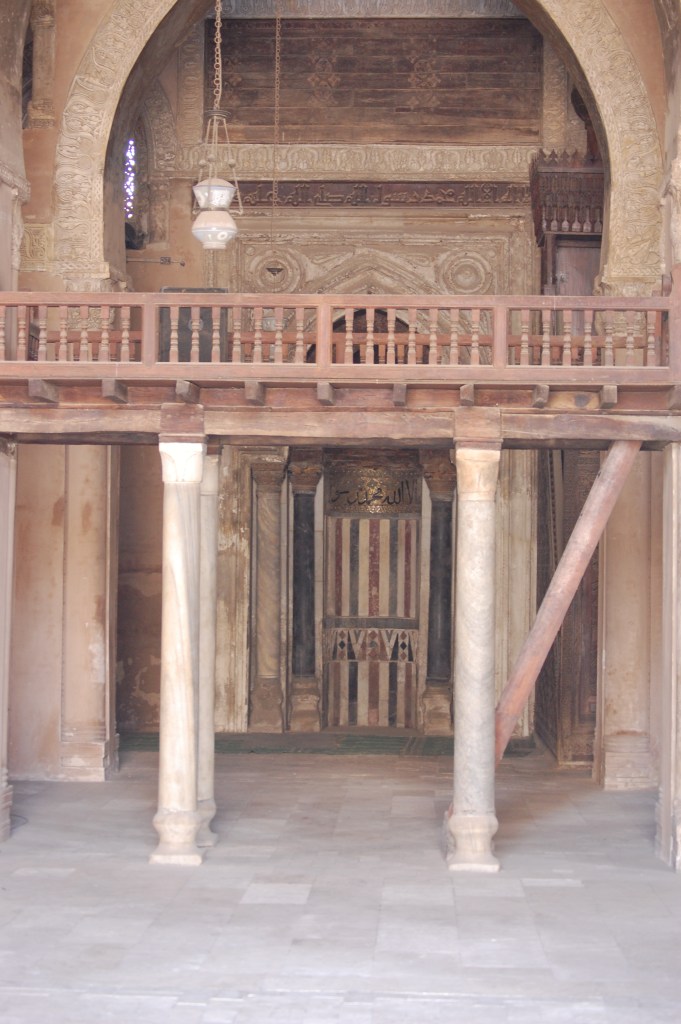
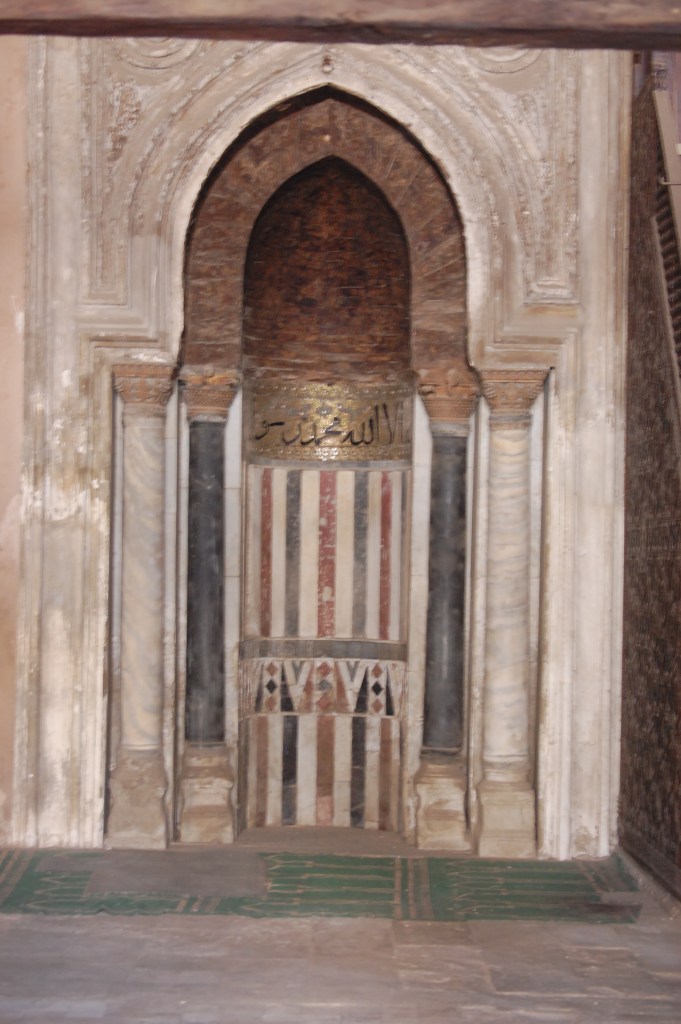
The arches give a wonderful geometric depth to the mosque as you wander around. There’s no shortage of great photos, and a real sense of order and peace inside that space. The mihrab features ornate stone patterns and is flanked by a tall elaborately carved wooden minbar. There is also a wooden platform supported by small marble pillars called a dikka where the Quran is recited. If you look on either side there are beautiful carvings on the piers.
Spend as much time as you want in the mosque. There are benches scattered around where you can sit, and it usually is not very crowded. I always enjoyed making a full loop of the corridors and sitting for a while watching the pigeons fly around.
When you are done in the mosque, go back to the door and turn in your foot coverings, and ask the men there if you can go see the minaret. They may ask for an extra tip, but it’s worth it. They will walk you back around the end of the mosque, open a gate to a staircase that will lead you up the spiral minaret.
Cairo is called the city of a thousand minarets, but the one at Ibn Tulun is unique. Its spiral shape is reminiscent of the minaret in Samarra (in Iraq) and with it perched on the square base also seems to have been inspired by the lighthouse at Alexandria. Which would have still been standing when the mosque was built.
The stairs start very wide as you climb up, but they get narrower with each segment. At the top of the square section you can turn left to go further up the minaret, or you can turn right and walk out on the roof of the mosque itself and look down into the sahn. I walked all the way around it a few times, and was never told not to.
The next section of the minaret spirals upwards, and there are not good hand holds. It also gets quite high at this point, so if you are uncomfortable with heights, or if you don’t feel particularly sure-footed, it might be best not to continue. It also gets narrower as you climb up. The final section into the top of the minaret it quite tight, and the steps are very awkward. There is not a lot of space up there for multiple people so if there are other folks around, make sure to be conscious of their time.
It is a wonderful place to see Cairo. You can peek down onto rooftop verandas where Cairene’s spend their time. You can see the pigeon houses where hobbyists keep their pet birds, and on rare clear days you can see to the Nile river and the Giza plateau. The man with the key will be waiting for you at the bottom, so don’t stay too long, but make sure to soak it in a little. It’s about as good as Cairo gets.
Be careful on your way down, again, there aren’t really any hand holds and it’s quite high. When you get to the bottom, if you didn’t already, make sure to tip the man with the key.
You can call an Uber from the mosque, or you can catch a taxi. It will be easier to catch one on the Al Saleeba road since there is more traffic.
4. Extra!
If you still have energy after all that walking, here are a couple of extra things you can do.
There is another interesting site at the Mosque, which is the Gayer Anderson Museum, which is basically attached to the Mosque itself.
Gayer Anderson was a British army officer whose house has been maintained as a museum. It is full of wonderful artwork, furniture, historic artifacts, and other items of interest that he collected over his life in Egypt. It is a wonderful example of a British colonial house and was used as a setting in a the James Bond film “The Spy Who Loved Me”. Actually, The Mosque of Ibn Tulun has a very brief appearance in that film as well.
This museum is really wonderful in terms of the artifacts, but all the times I have been there the guide they have assigned me rushed me constantly and was really annoying. It’s worth seeing if you have the time, but be prepared for the guide.
If you’re feeling particularly adventurous, it’s kind of fun to stop at a street cafe for some tea. You can just order by asking for “Shay nyah nyah” which is black tea with mint. Load it up with sugar and you’ll be one of the locals (almost).

Walking Map!
All photos from Martin Gilmore
 Across the Sand